
ARTERIAL AND VENOUS DOPPLER LONDON
(£400)
(Vascular Doppler | Vascular Ultrasound)
WHAT IS ARTERIAL AND VENOUS DOPPLER?
Arterial Doppler Ultrasound (Legs & Arms)
An Arterial Doppler scan examines blood flow in the arteries of the legs, arms, neck, or abdomen to detect narrowing, blockages, and blood circulation problems. This Doppler scan for arteries is commonly used for symptoms such as leg pain/cramping, cold limbs, or reduced pulses, and is the safest way to check for Peripheral Artery Disease (PAD).
Venous Doppler Ultrasound Scan
A Venous Doppler scan evaluates how well veins return blood to the heart. The venous Doppler Scan helps identify conditions such as Deep Vein Thrombosis (DVT), Venous Reflux, Varicose Veins, and other causes of swelling or discomfort in the legs or arms.
HOW IS A VASCULAR DOPPLER TEST PERFORMED?
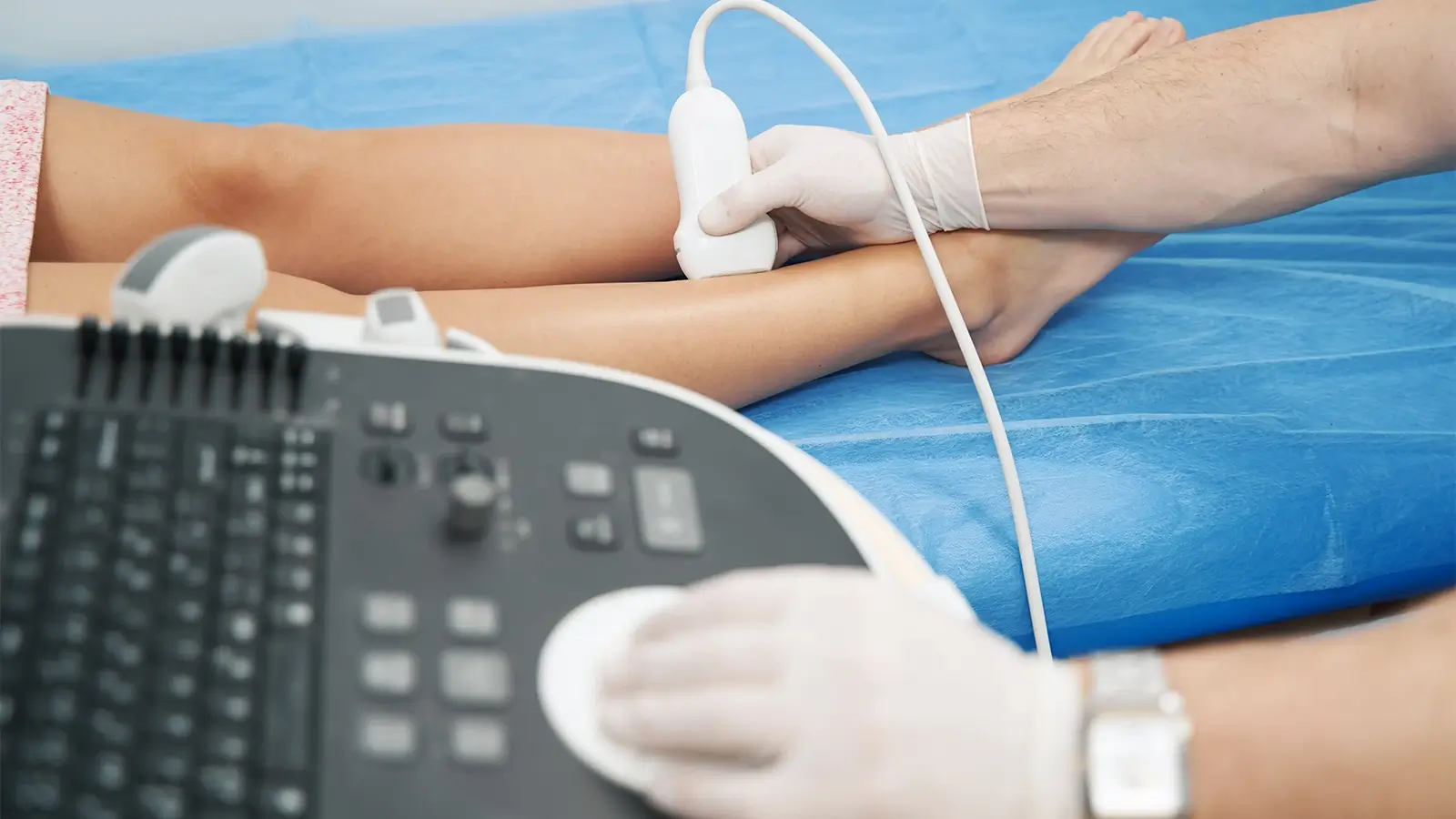
A Vascular Doppler is a painless, non-invasive ultrasound performed by a vascular specialist to check the blood flow in the arteries and veins. During the scan, high-frequency sound waves are used to monitor the blood circulation. A small amount of gel is applied to the skin, and a handheld probe is moved over the area to capture detailed images of the vessels. Blood pressure may be taken at the ankles to calculate the ankle-brachial index (ABI). You may also be asked to do some physical activity to assess how your blood flows through the vascular system under stress. The scan typically takes 30–60 minutes.
WHY IS AN ARTERIAL DOPPLER SCAN NEEDED?
An arterial Doppler Ultrasound is performed to identify the underlying causes of the following conditions:
Aortic Dilatation & Abdominal Aortic Aneurysm
This scan helps find Aortic Dilatation (enlargement of the aorta) and Abdominal Aortic Aneurysms (bulging of the aorta outside the abdomen) early, helping prevent serious complications.
Narrowing of the Arteries
The Arterial Doppler evaluates the aorta and peripheral arteries to check reduced blood flow caused by plaque build-up, calcification, or clot formation. Sometimes, this condition can lead to Atherosclerosis, i.e., severe narrowing and hardening of the arteries.
Peripheral Arterial Aneurysm & Peripheral Arterial Disease
This Doppler arterial scan detects early signs of PAA and PAD, both of which can lead to reduced circulation and various heart conditions.
Preoperative Planning in Vascular Treatment
Arterial Doppler Imaging helps surgeons identify the exact location and severity of arterial narrowing before any vascular procedure.
Leg Pain or Cramping (Claudication)
People experiencing calf or thigh pain while walking may have PAD, and a Doppler scan helps confirm if poor blood circulation is the reason.
Numbness in the Feet or Lower Limbs
Cold, numb, or discoloured feet can indicate poor arterial supply, and the scan checks for blockages causing these symptoms.
WHY YOU MIGHT NEED A VENOUS DOPPLER TEST?
Your heart doctor will recommend the most suitable type of electrocardiogram based on your symptoms and any suspected heart condition.
Deep Vein Thrombosis (DVT)
A Venous Doppler identifies blood clots in the deep veins, which helps prevent serious complications such as pulmonary embolism.
Venous Reflux and Varicose Veins
The Venous Doppler Scan evaluates the functioning of the main valves and detects backward blood flow that can cause the formation of varicose veins.
Leg Swelling or Pain
If you are suffering from swelling, heaviness, or persistent leg pain, your vascular doctor may recommend a Venous Ultrasound to understand the underlying causes, such as poor venous return or vein disease.
Superficial Thrombophlebitis
Superficial Thrombophlebitis, also known as Superficial Vein Thrombosis, is the formation of a blood clot in a vein near the surface of the skin that causes inflammation.
TYPES OF VASCULAR DOPPLER ULTRASOUND SCANS
FAQs








BOOK A CARDIOLOGY APPOINTMENT ONLINE
If you’ve recently had a specialist heart checkup and feel unsure about the diagnosis or treatment plan, getting a second opinion can provide the clarity you need. Schedule a consultation with Dr. Lo Monaco, an expert private cardiologist in London, or book your heart test/scan today for fast, specialist cardiac care.