
CARDIAC CT SCAN | HEART CT LONDON
(£1,385 – £1,500)
WHAT IS A CARDIAC CT OR COMPUTED TOMOGRAPHY?
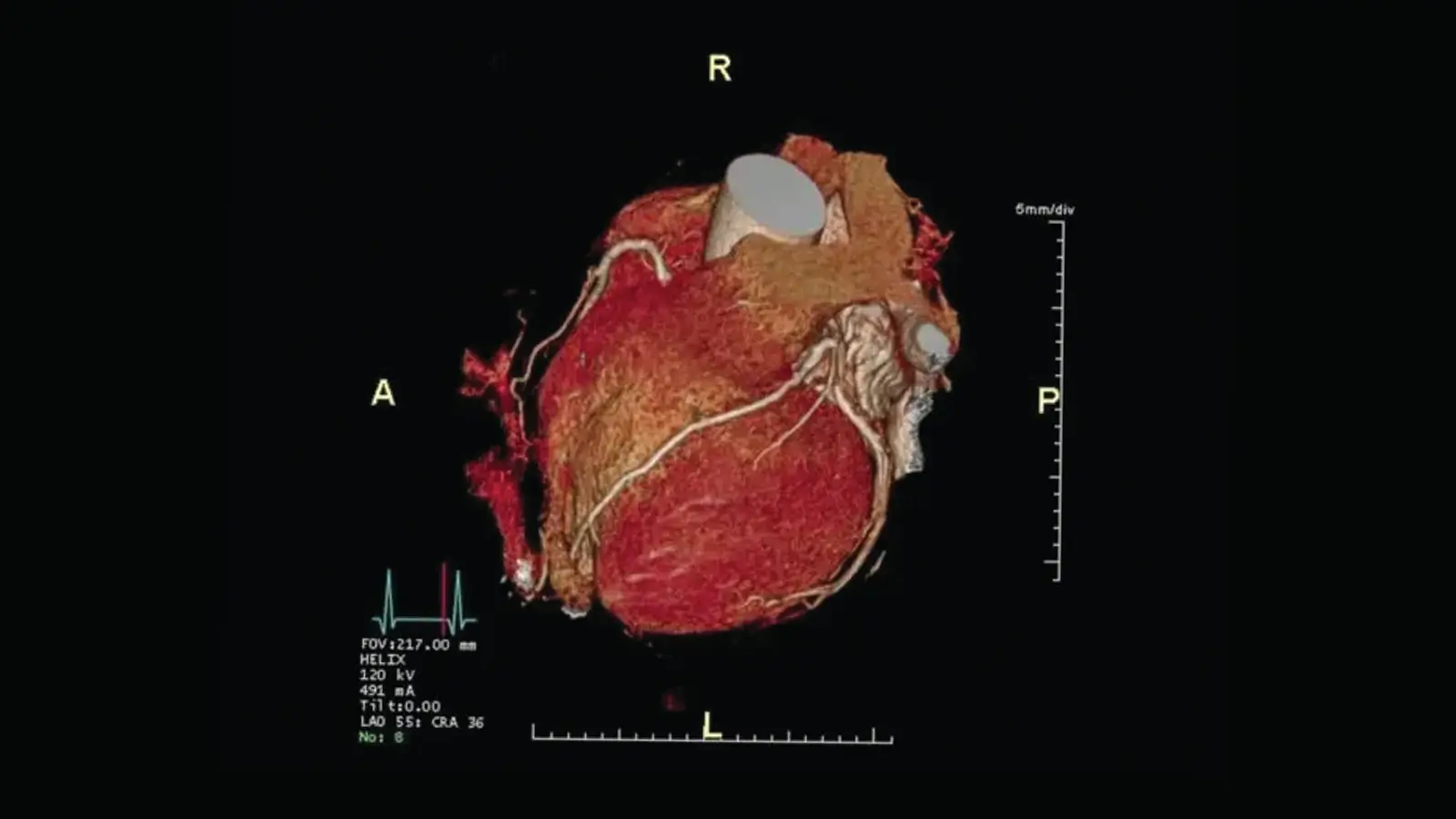
A Cardiac CT is a non-invasive scan used to visualise the heart’s anatomy and create its 3D images using high-resolution X-rays. It helps cardiologists analyse the heart’s internal structure, including chambers, valves, and blood vessels, with more precision and get a detailed overview of your cardiac health.
HOW IS A HEART CT SCAN PERFORMED?
Before a cardiac CT scan, a Renal Function Test is often requested to ensure your kidneys can safely process the contrast dye. You may also be given medication to lower your heart rate below 63 bpm, which helps produce clear images. Contrast dye is injected to enhance the visualisation of the heart and coronary arteries. You are then asked to lie still in the scanner while detailed images are captured. The procedure takes around 15-20 minutes, after which you are advised to drink plenty of fluids to help flush out the dye. Your clinician will review the images and discuss the results immediately or in the follow-up appointment.
TYPES OF CARDIAC COMPUTED TOMOGRAPHY SCANS
CT Cardiac Calcium Score Test
A Calcium Scoring CT Scan is performed to measure the amount of calcium in the coronary arteries. By identifying the calcified plaque, your cardiologist can better understand the severity of the condition and suggest preventive measures to support long-term heart health.
Coronary CT Angiogram
A CT Coronary Angiography is a non-invasive test that uses advanced X-ray imaging to detect plaque buildup in the coronary arteries. During the scan, an iodine-based dye is injected into the vein in your arm to improve the visibility of your heart’s internal structure and coronary arteries.
WHY DO YOU NEED A PRIVATE CT OF THE HEART?
A cardiologist may request a CT scan if you’re experiencing some symptoms that indicate cardiac abnormality or have a family history of heart issues. Here are a few common reasons your consultant may suggest a three-dimensional heart Scan:
FAQs







BOOK A CARDIOLOGY APPOINTMENT ONLINE
If you’ve recently had a specialist heart checkup and feel unsure about the diagnosis or treatment plan, getting a second opinion can provide the clarity you need. Schedule a consultation with Dr. Lo Monaco, an expert private cardiologist in London, or book your heart test/scan today for fast, specialist cardiac care.