How to Sleep with a 24-Hour Blood Pressure Monitor? UK Guide
If your doctor has recommended Ambulatory Blood Pressure Monitoring to track your blood pressure over a full day, you may be wondering how to sleep peacefully, how to keep the device safe, or what sleeping position is best while wearing an ABPM. Don’t worry. In this UK patient guide, we have shared practical, medical-backed tips to help you get accurate readings while staying comfortable at night.
Although wearing a 24-hour blood pressure monitor may feel slightly uncomfortable, adjusting the device position and maintaining proper posture can help you sleep more restfully. Let’s explore the key details!
What is a 24-Hour BP Monitor?
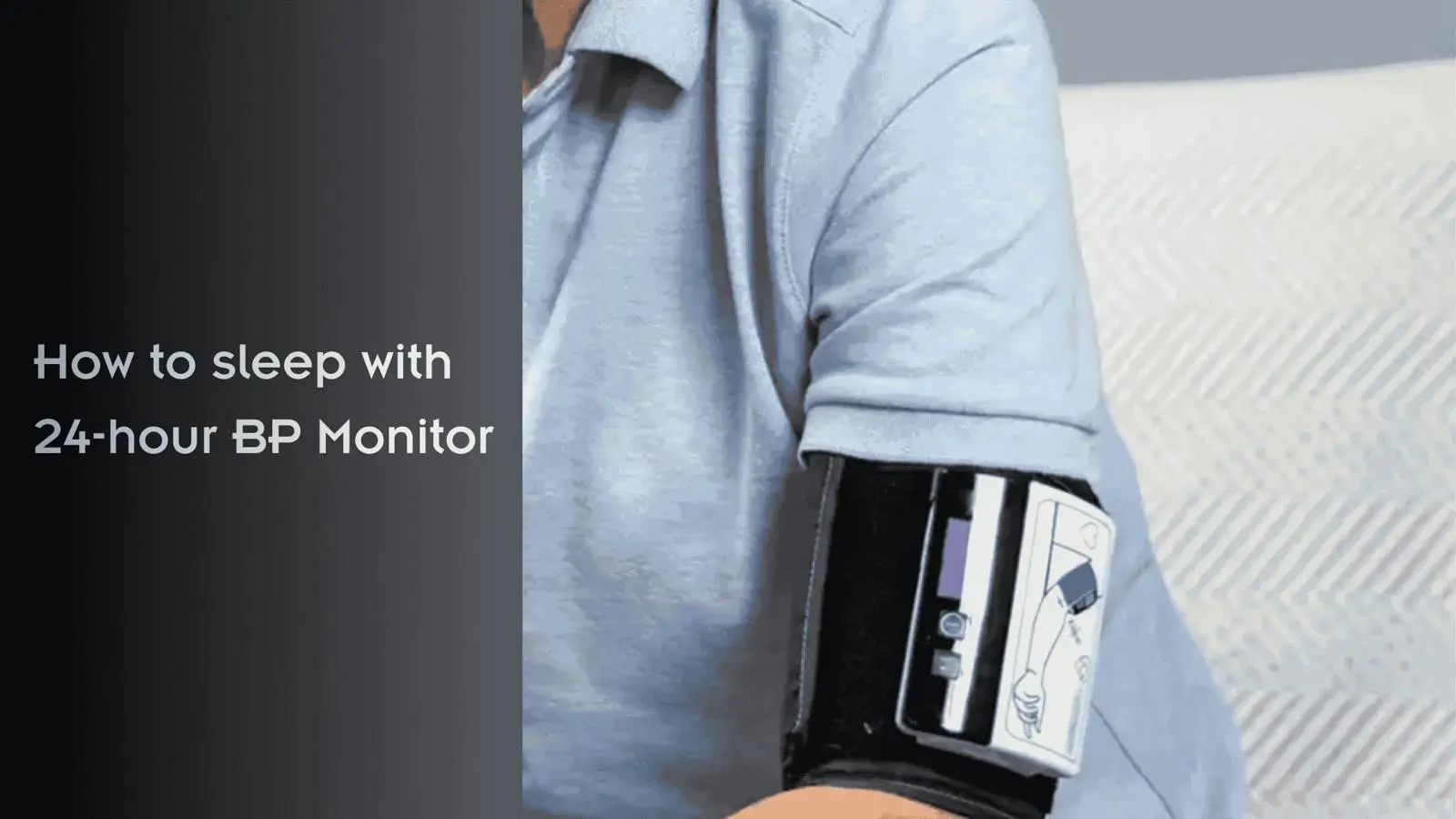
An Ambulatory blood pressure monitor is a portable, automated device that a person wears for 24 hours while performing routine activities and during sleep. It looks similar to a standard blood pressure machine – an arm cuff connected to a small digital device through a tube. The BP recording device is worn around your waist using a belt clip.
The monitor takes BP readings at regular intervals, every 30 minutes during the day and 60 minutes at night. Continuous BP monitoring helps doctors identify hidden BP patterns and detect abnormalities that may not be detected during a single clinic measurement.
Book your Ambulatory BP Monitor Online
Parts of an Ambulatory Blood Pressure Monitor (ABPM)
Although an ABPM looks similar to a standard blood pressure device, it includes some extra components necessary to record accurate BP readings over 24 hours. The main parts of an ABPM device include:
Blood Pressure Cuff: An inflatable cuff wrapped around your upper arm. It inflates to apply pressure on your arm and then slowly deflates as the device measures your blood pressure, just like a standard clinic monitor.
Connecting Tube: A flexible tube that connects the cuff to the monitor. It allows air to move into the cuff so it can inflate and deflate during each reading.
Digital Recorder / Monitor: A small portable device that stores all blood pressure readings taken during the monitoring period. It is usually worn on a belt or a shoulder strap.
Battery Unit: Small batteries to ensure uninterrupted BP recording for 24 hours.
Carrying Pouch or Belt Clip: To help carry the monitor comfortably throughout the day and night while keeping it secure during daily activities and sleep.
How to Sleep With a 24-Hour BP Monitor? Key Tips for a Peaceful Sleep
To be honest, sleeping with an ambulatory BP monitor is not very comfortable. However, following the guidelines of experts can help ensure a peaceful night’s sleep. Here are some simple tips to make your experience more convenient.
Prepare Yourself Before Going to Bed
Wearing an Ambulatory Blood Pressure Monitoring device may feel slightly uncomfortable at first, but simple preparation can significantly improve your sleep quality. Here are some insightful tips for you:
- Wear loose, comfortable clothes, ideally a short-sleeved or stretchable top, so the cuff can inflate and deflate without feeling restrictive.
- Secure the device properly with a belt clip before going to bed to prevent the tube from twisting or detaching from the machine. You can also use a soft pouch to keep the device safe and prevent pulling on the tube.
- Do not fasten the device too tightly to feel more comfortable during sleep.
- Dim the lights and avoid screens before bed to help your body relax and fall asleep more easily.
Choose the Right Sleeping Position
Your sleeping position plays a great role in staying comfortable while wearing an ABPM device. There is no single ‘perfect’ position, but you should choose one that keeps you comfortable while protecting the device and ensuring accurate readings.
Best Position
Sleeping on your back is usually the most comfortable option. It helps keep your arm straight and reduces the chance of disrupting the monitor.
Alternate Option
If you cannot sleep on your back, lie on the side opposite the cuffed arm. For extra support, place a pillow in front of you and rest your cuffed arm on it.
Positions to Avoid
Avoid sleeping on your stomach or directly on the cuffed arm, as this can affect blood flow and lead to inaccurate readings.
Keep the Monitor and Tubing in Place
Keeping your BP monitoring device secure is essential for both comfort and accurate readings during sleep. Attach the monitor to your waistband using a belt clip or place it in a soft pouch to prevent it from pulling on the tubing.
Ensure the tube is not twisted or stretched, as this can cause discomfort or disturb the readings. Before settling down, do a quick comfort check. The cuff should not be so tight that it leaves enough space to slide a finger underneath.
Relax When the Cuff Inflates
I understand how frustrating it is when you’re sleeping comfortably, and the cuff suddenly inflates or beeps during the night. It is a common problem when wearing an ABPM. Although it may disrupt your sleep, it is important for recording accurate readings.
During cuff inflation, stay calm and avoid sudden movements. Keep your arm still and straight. Staying relaxed not only improves comfort but also helps ensure reliable results.
Also Read: How to Sleep Comfortably With a Holter Monitor?
What to Wear When Using a 24-Hour BP Monitor?
Wearing comfortable clothes is extremely important when using an ambulatory BP measurement device. It helps you remain restful throughout the period and ensures accurate BP readings. Here are a few helpful clothing tips, recommended by experts:
- A half-sleeve or sleeveless top is much more convenient for holding a BP monitor for a whole day. It helps you wear the blood pressure cuff more comfortably and prevents detachment or entangling issues.
- Don’t wear tight clothes, especially around your arms, shoulders, or waist, where the monitor is fixed, for more comfort.
- If you want a full-sleeve shirt, it’s important to wear a loose or stretchable fabric to avoid over-tightening of the device under your clothes.
The NHS Guidelines for Wearing an Ambulatory BP Monitor
To get the most accurate results from your Ambulatory BP device, it’s important to properly follow your doctor’s guidelines. The NHS provides practical tips for UK patients to help them wear the monitor correctly, stay comfortable, and ensure reliable readings. Here are the key recommendations:
- Keep the monitor at heart level to ensure accurate blood pressure readings. If you’re lying on your side, place a pillow under your cuffed arm, so it stays level with your chest.
- You can continue performing your routine activities; however, avoiding strenuous exercise or heavy workouts is recommended.
- Keep your arm in a relaxed position – don’t bend or move it unnecessarily.
- Don’t remove the BP cuff before the set period or until asked by your physician.
- Avoid taking a shower when wearing the device, as water penetration can damage the ABPM machine.
- Note down any unusual symptoms or blood pressure readings during the monitoring period to help your doctor assess your condition accurately.
Sleeping With an ABPM Device: Common Problems and Their Solutions
| Problem | Recommended Solution |
| Itching or Rash | Skin irritation or itching can occur while wearing the cuff. Avoid scratching, as this can worsen the irritation. If needed, lightly pat the area to reduce rash. |
| Tangling/Twisting of the Tube | Keep the cuff, tubing, and monitor positioned carefully. Avoid unnecessary handling to prevent the tube from twisting, which could affect the accuracy of your blood pressure readings. |
| Cuff too Tight | Do not wrap the cuff too tightly around your arm. A comfortable fit ensures accurate measurements while preventing pain or discomfort. |
| Disturbed Sleep | Night-time cuff inflation and beeps may wake you up. Accept that brief interruptions are normal and only last a few moments during the 24-hour monitoring period. |
| Anxiety | Some patients feel anxious while wearing the ABPM device. Try deep breathing, relaxation techniques, and focusing on calm thoughts to stay relaxed throughout the day and night |
| Loose or Unsecure Device Placement | A slipping cuff or loosely positioned monitor can disturb your sleep and affect readings. Make sure the device is securely attached, and the tubing is not dangling or pulling. |
What to Do If the Cuff Becomes Loose During the Night?
If your BP cuff becomes loose while sleeping during the night, carefully tighten it again without disturbing the tube and the device. Adjust it in the correct position, i.e., about 1-2cm above your elbow. Position the tube in the upward direction on your arm to avoid its twisting and ensure accurate readings.
Try not to completely unwrap the cuff, as you may not properly rewrap it around your arm, which can cause false BP readings. If you necessarily need to reattach it, ensure the cuff is at the same level as your heart when lying down.
Bottom Line
Wearing an Ambulatory BP Monitor may feel uncomfortable, but with proper preparation, correct positioning, and a calm approach, you can complete the 24-hour monitoring period comfortably and get accurate results.
If you’re looking to monitor your blood pressure under expert guidance, book your ABPM in London with Dr Francesco Lo Monaco, an expert cardiologist and blood pressure management specialist, to get clear insights into your heart health.