
SUPRAVENTRICULAR TACHYCARDIA (SVT) – SYMPTOMS & TREATMENT
Supraventricular Tachycardia (SVT) refers to a heart rhythm abnormality that originates from the atria (upper chambers of the heart) and causes a racing heartbeat.
WHAT IS SUPRAVENTRICULAR TACHYCARDIA (SVT)?
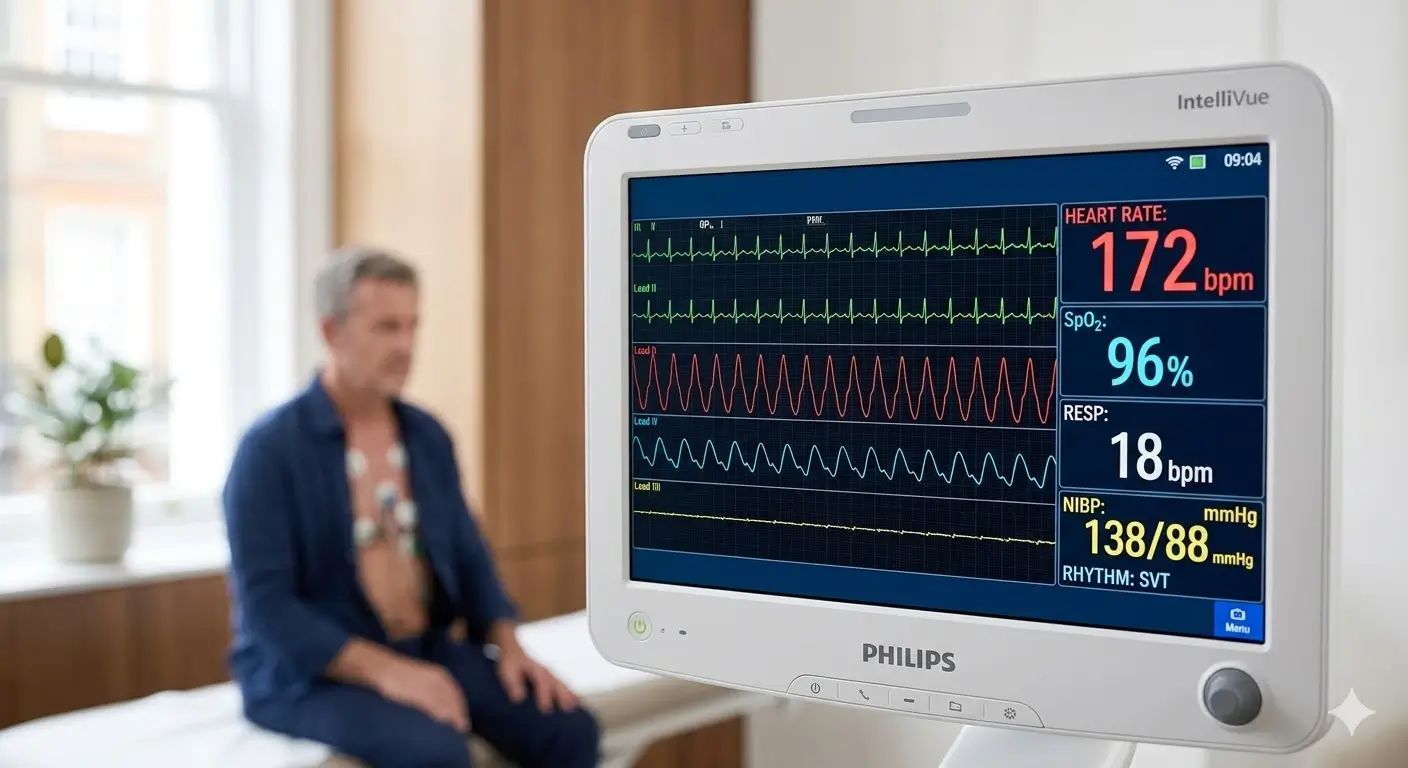
Supraventricular Tachycardia refers to a heart rhythm abnormality that originates from the atria, the upper chambers of the heart, and causes the heartbeat to increase (150-220 times a minute). However, unlike Atrial Fibrillation, the heart rate in SVT often remains steady and regular. Most SVTs are not harmful, but prolonged and frequent episodes need proper evaluation to prevent long-term cardiac issues.
SYMPTOMS OF SVT
The symptoms of SVT can be intrusive and may feel similar to other heart conditions. Therefore, proper diagnosis through cardiac tests and wearable technologies is essential to rule out more serious conditions. Common symptoms may include:
WHAT CAUSES SUPRAVENTRICULAR TACHYCARDIA?
An SVT is caused by an extra electrical connection in the heart. This abnormal connection disrupts the normal rhythm and leads to episodes of rapid heart rate.
HOW IS SUPRAVENTRICULAR TACHYCARDIA DIAGNOSED?
Diagnosing SVT can sometimes be challenging because episodes often start and stop suddenly. In many cases, the heart rhythm returns to normal before medical assessment takes place.
To diagnose supraventricular tachycardia, the doctor takes a detailed medical history, including your symptoms, how often episodes occur, and how long they last. The main test used is an ECG, which records the heart’s electrical activity and can confirm SVT if performed during an episode.
In some cases, further tests like an Echocardiogram, an ECG Holter, or an Event Recorder may be recommended for a more detailed assessment.
WHAT CAN TRIGGER THE SYMPTOMS OF SVT?
Although SVT symptoms can occur at any time, certain factors may trigger or worsen episodes. Common triggers include caffeine, alcohol, emotional stress, and lack of sleep, all of which can affect the heart’s electrical activity. Identifying and managing these triggers can help reduce the frequency of SVT episodes and improve overall heart rhythm control.
IS SVT DANGEROUS?
SV Tachycardia is usually not dangerous in people with a structurally and functionally normal heart. However, if SVT occurs due to an extra electrical connection between the upper and lower chambers of the heart, it may lead to serious complications.
SUPRAVENTRICULAR TACHYCARDIA TREATMENT: HOW TO MANAGE SYMPTOMS?
Treatment for heart SVT depends on the underlying cause, how often episodes occur, and how severe the symptoms are. In many cases, SVT settles on its own and may not require immediate treatment. However, if symptoms are frequent or more severe, further evaluation is needed.
As a leading preventive cardiologist, Dr Francesco Lo Monaco largely focuses on identifying triggers early and guiding patients on lifestyle changes to reduce the frequency of episodes.
Treatment may include simple lifestyle changes, medicine, or specialist procedures, such as an EP study or cardiac ablation. An electrophysiology (EP) study can help identify the exact cause, and cardiac ablation is often recommended as a first-line treatment for long-term control.








BOOK A CARDIOLOGY APPOINTMENT ONLINE
If you’ve recently had a specialist heart checkup and feel unsure about the diagnosis or treatment plan, getting a second opinion can provide the clarity you need. Schedule a consultation with Dr. Lo Monaco, an expert private cardiologist in London, or book your heart test/scan today for fast, specialist cardiac care.