
Atrial Flutter: Symptoms, Causes, and Treatment
Atrial Flutter is an abnormal heart rhythm that causes the atria, the upper chambers of the heart, to beat rapidly. Early assessment and accurate diagnosis are important to prevent serious cardiovascular complications.
What is Atrial Flutter?
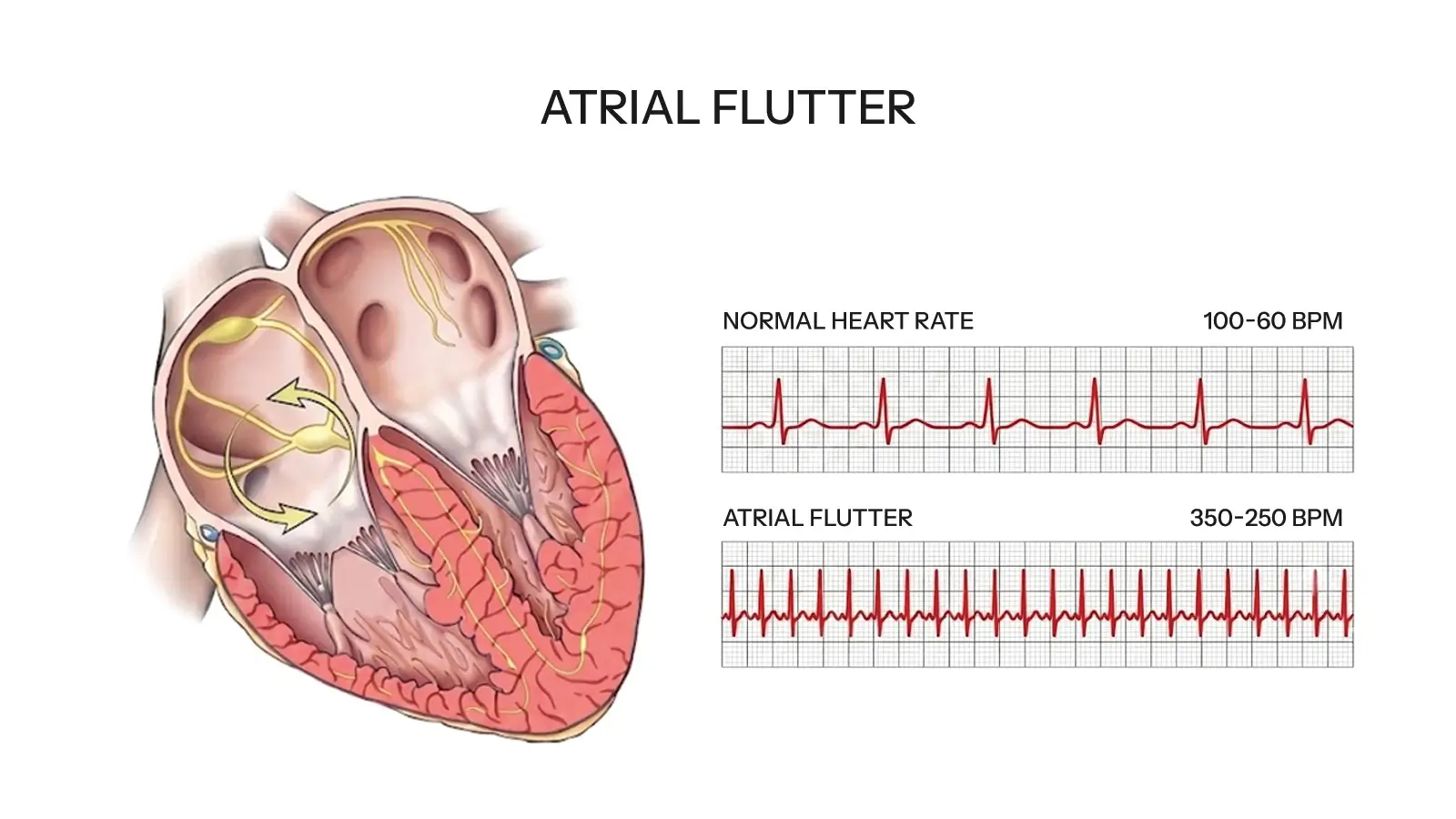
Atrial Flutter, or AFL, is a type of supraventricular arrhythmia, a heart rhythm disorder that causes the atria to beat unusually fast but in an organised pattern. A normal resting heart rate is 60 to 100 beats per minute. In Atrial Flutter, the atria beat at around 300 beats per minute.
What Causes Atrial Flutter?
The heart relies on a coordinated electrical system to maintain a regular heartbeat and circulate blood throughout the body. Atrial Flutter occurs when abnormal electrical circuits develop within the atria, causing the upper chambers to contract much faster than normal. As a result, the ventricles cannot keep up with the rapid atrial rhythm, leading to an abnormal heartbeat.
Common causes include:
Symptoms of Atrial Flutter
Some people with Atrial Flutter may experience no symptoms, and the condition is often detected during a routine heart check. Common symptoms may include:
Atrial Flutter Vs Atrial Fibrillation
Atrial Flutter (AFL) and Atrial Fibrillation (AFib) are both common heart rhythm disorders, but they differ in how the electrical signals behave within the heart. In Atrial Flutter, the rhythm is typically fast but more organised and regular. In contrast, Atrial Fibrillation causes a highly irregular and chaotic rhythm. Some patients may experience both conditions at different times.
How Does Dr Francesco Lo Monaco Diagnose AFL?
Diagnosing AFL may require prolonged heart rhythm monitoring due to its intermittent symptoms. Dr Francesco Lo Monaco focuses on evaluating patients’ family history, symptoms, and physical condition to make an accurate diagnosis. For detailed insights, you may be advised to undergo one or more of the following tests:
Stress Echocardiogram
Electrophysiology Study (EPS)
Blood Tests
Treatment Options for Atrial Flutter
The main goals of treating AFL are to manage the heart rhythm, avoid complications, and improve overall cardiac health. As a leading preventive cardiologist in the UK, Dr Francesco Lo Monaco focuses on combining evidence-based treatment with sustainable lifestyle improvements.
When to Seek Urgent Medical Care?
Atrial Flutter is curable with early diagnosis and the right treatment. However, if you experience one or more of the following symptoms, seeking urgent care is essential:
BOOK A CARDIOLOGY APPOINTMENT ONLINE
If you’ve recently had a specialist heart checkup and feel unsure about the diagnosis or treatment plan, getting a second opinion can provide the clarity you need. Schedule a consultation with Dr. Lo Monaco, an expert private cardiologist in London, or book your heart test/scan today for fast, specialist cardiac care.