
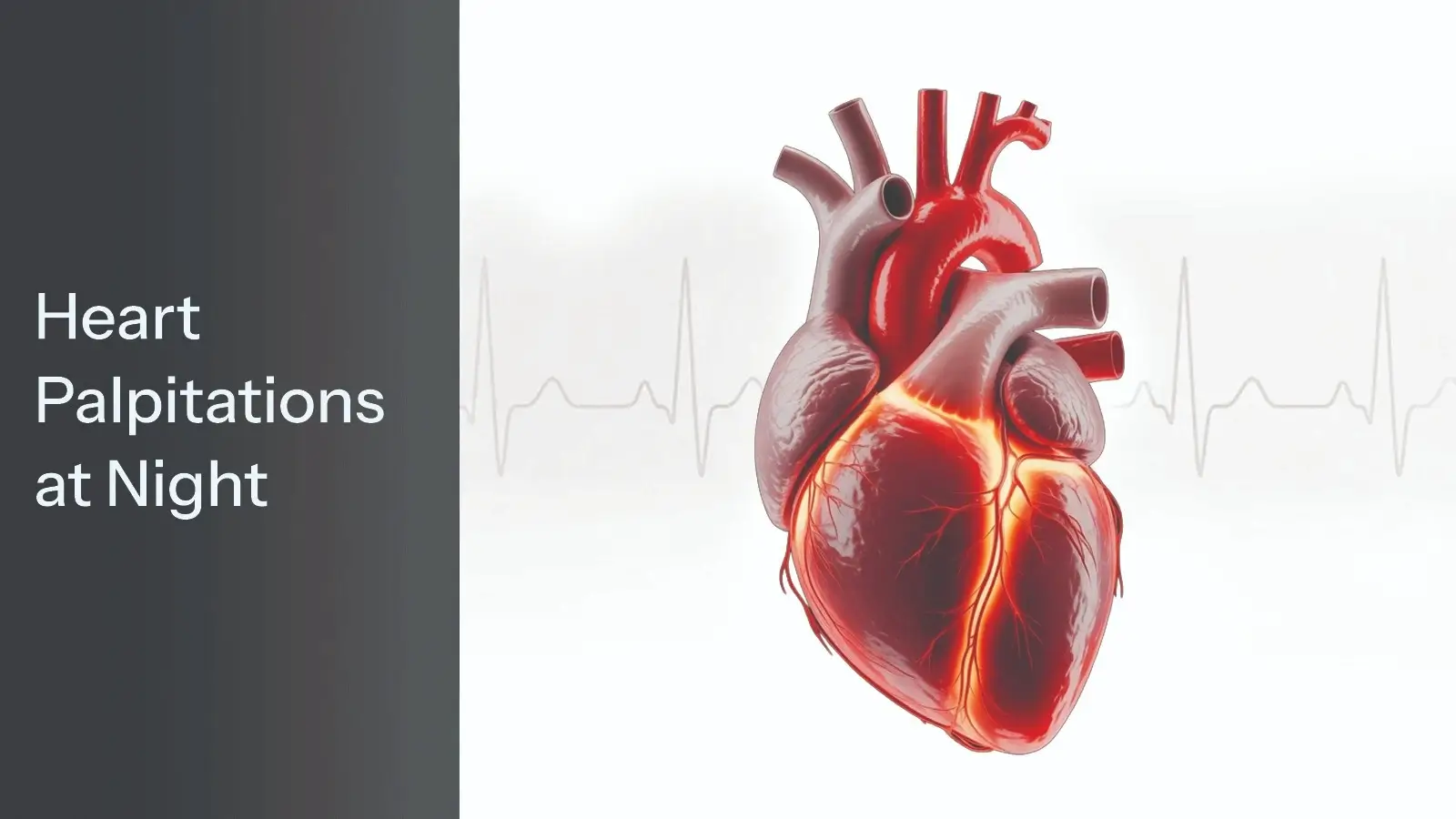
Heart Palpitations at Night: Causes, Diagnosis, and Treatment
Feeling your heart pounding, fluttering, or skipping a beat when lying down at night? Though it can be distressing, especially when episodes become frequent or severe, they usually aren’t harmful. Finding your triggers and managing the condition can help prevent heart palpitations at night. Below, we explain the causes of nighttime palpitations, ways to manage them effectively, and when to seek medical attention.

Don’t Wait Weeks for Answers
Get fast, specialist-led heart checks with same-day or quick appointments
What Are Heart Palpitations?
Palpitations are the sensations of a fluttering, pounding, or racing heartbeat. Some people may also feel as if their heart has skipped a beat. In simple terms, we can say these are the sensations of being aware of your heart beating. The feeling may be mild or more noticeable and can last from a few seconds to several minutes.
How Common are Heart Palpitations at Bedtime?
Heart palpitations at night are very common. The symptoms can occur at any time – while sitting, resting, or lying down. Some people also experience palpitations after eating at night, which can range from mild to severe. In many cases, palpitations feel more noticeable at night because there are fewer distractions, making people more aware of unusual sensations in their heartbeat. Identifying potential triggers and understanding what helps calm the symptoms may reduce both their frequency and severity.
Symptoms
When you lie down, you may feel one or more of the following symptoms of nighttime heart palpitations:
- Futtering or pounding beats
- Irregular heartbeat
- Racing or skipped beat
If any of these symptoms accompany chest pain, lightheadedness, breathlessness, or fainting, you must seek immediate medical attention, as these could be indications of a serious health issue.
What do I Get Heart Palpitations While Lying Down At Night?
Palpitations can occur at any time of the day, although many people notice them at night. The exact cause is not always clear, but common triggers may include:
- Dehydration and electrolyte imbalance
- Caffeine, nicotine, and alcohol
- Stress, depression, and anxiety
- Sleeping posture
- Hormonal changes during menopause,
- Certain medications
- Lack of quality sleep
Certain health conditions may also contribute to causing night-time heart palpitations, such as:
- Arrhythmia (irregular heart rhythm)
- Thyroid disorder
- Hypoglycaemia (low sugar level)
- Anaemia
- Heart disease or structural abnormalities in the heart
- Metabolic syndrome
Can Vaping Cause Palpitations?
How to Stop or Calm Heart Palpitations at Night?
Heart palpitations at night that make it hard to sleep or cause you to wake from sleep can be uncomfortable and worrying. Management depends on the cause and severity. The following tips may help calm the symptoms and support better sleep:
- Try to stay relaxed and stress-free before going to bed.
- Practice deep breathing, breathing exercises, or meditation.
- Drink a glass of water, especially if dehydration may be contributing to the symptoms.
- Get up and take a short, light walk around your room or nearby area.
- Try to diverge your focus when feeling unusual symptoms
- Some experts say that sleeping on your back or left side may be more likely to develop palpitations. So, changing your sleeping posture may help reduce symptoms.
Learn More: How to Stop Palpitations After Eating
Night-time Palpitations or Anxiety: How to Tell the Difference?
Night-time heart palpitations and anxiety often feel similar due to matching symptoms. Anxiety can trigger a racing heartbeat, skipped beats, sweating, or a feeling of panic, especially at night when the mind is more focused on bodily sensations.
Palpitations may or may not be caused by anxiety. They may occur due to caffeine, dehydration, hormonal changes, sleeplessness, or certain medicines. If your heart palpitations are due to anxiety, they often show the following symptoms:
- Feeling nervous or panicked
- Breathlessness
- Trembling
- Sweating
- Difficulty falling asleep
Treatment for Nighttime Heart Palpitations
Treatment for heart palpitations at night mainly focuses on identifying triggers and making lifestyle changes. However, frequent, severe, or persistent palpitations may require medical evaluation. If an underlying health condition is causing the palpitations, your healthcare provider will treat the condition accordingly. He will recommend lifestyle modifications, stress management techniques, and daily habits to help reduce symptoms. In some cases, medications may be prescribed to slow the heart rate and control palpitations.
How to Prevent Palpitations at Night? Key Tips to Follow
- Avoid alcohol, caffeine, or energy drinks before bedtime.
- Avoid eating large meals late at night, as indigestion or acid reflux may trigger palpitations.
- Manage stress or make time for relaxing activities.
- Maintain a healthy work/life balance to reduce physical and emotional stress.
- Practice meditation, deep breathing, or other relaxation techniques.
- Maintain a healthy weight.
- Avoid junk foods and follow a healthy, balanced diet.
When to See a Healthcare Provider About Palpitations at Night?
If you have frequent heart palpitations when lying down at night or the issue is getting more severe day by day, you should schedule an appointment with your provider to manage your symptoms and ensure these are not the signs of an underlying health problem. Moreover, it is important to seek urgent medical attention if heart palpitations in bed accompany the following issues:
- Chest pain or discomfort
- Persistent and severe fatigue
- Difficulty breathing
- Dizziness or fainting
- Swelling in your limbs, especially in your ankles, feet, and legs.
Conclusion
Although heart palpitations at night are usually not dangerous; frequent, persistent, or severe symptoms should not be ignored. It is important to consult your healthcare provider to identify the underlying cause and get a thorough investigation. Also, following a healthy lifestyle, managing stress, and avoiding common triggers are crucial to effectively managing palpitations. For expert assessment and appointments with Dr Francesco Lo Monaco, leading consultant cardiologist, please contact our team.
Disclaimer
The information provided in this blog is for general information and educational purposes only. The content is not intended to be a substitute for professional medical advice, diagnosis, or treatment. Always seek the advice of your GP or a qualified medical professional regarding any medical condition. If you are experiencing a medical emergency, please contact emergency services immediately.