
How to Stop Palpitations After Eating? Expert Medical Advice
Do you feel your heart flutter, race, or pound after a meal? These sensations, often described as heart palpitations after eating, can be unsettling and may be triggered by certain foods. Though usually harmless, repeated and severe episodes require a proper checkup from a cardiologist to rule out the underlying cause.
In this guide, we’ll discuss the connection between certain foods and heart rhythm disturbance, common triggers to watch for, and practical ways to stop palpitations after eating. If you are experiencing persistent or worsening episodes, seeking expert evaluation from a heart specialist can help identify the root cause and provide expert insights for controlling the symptoms and managing your condition effectively.

Don’t Wait Weeks for Answers
Get fast, specialist-led heart checks with same-day or quick appointments
What Causes Heart Palpitations After Eating? 5 Common Food Triggers Explained
Mealtime palpitations are a common but often overlooked problem. They are associated with dietary choices, portion sizes, and underlying conditions, such as arrhythmias, acid reflux, or diabetes. Although such food-related palpitations are not usually an immediate cause for concern, they can feel uncomfortable due to their unsettling symptoms.
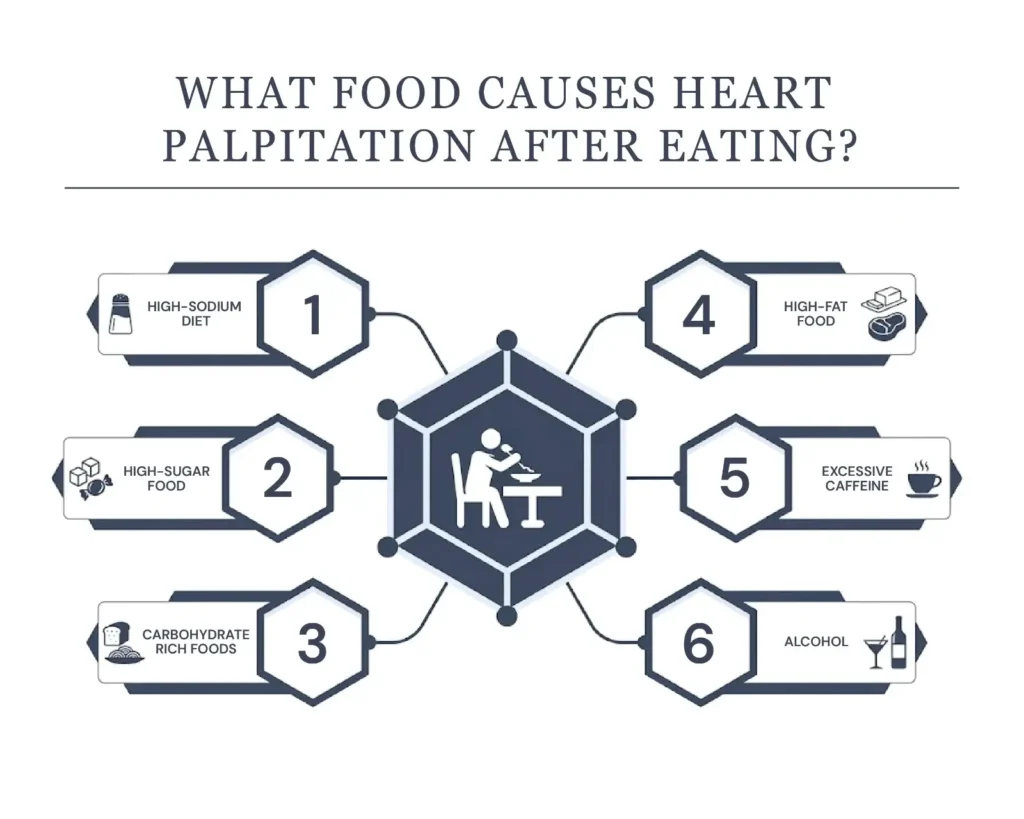
Identifying your triggers and making mindful dietary changes can help reduce the frequency and severity of these palpitations and support a more comfortable eating experience.
Here’s a list of common foods that can cause such heart rhythm disturbances:
High-Sugar and Refined Carbohydrates
Rapid spikes in blood sugar after consuming high-sugar or carbohydrate-rich foods are a common cause of food-related heart palpitations. These foods can trigger the release of hormones like adrenaline, leading to a racing or fluttering heartbeat.
If you often notice symptoms after eating sugary foods, it’s important to review your diet with a nutritionist and discuss the condition with your cardiologist. Making simple adjustments, such as controlling portion sizes and reducing sugar intake, can help you minimise episodes and support a more stable heart rhythm.
Spicy Foods
Spicy food is another common cause of heart palpitations after eating, particularly in individuals who are sensitive to digestive disturbances. These foods often trigger symptoms, such as acid reflux, bloating, or stomach irritation, which are closely linked to palpitations.
The connection lies in the digestive system. When digestion is disrupted, it can create pressure in the stomach, bile ducts, or the surrounding tissues. This internal pressure may indirectly affect the heart’s rhythm, leading to sensations like a fluttering or irregular heartbeat.
Caffeine
Caffeine acts as a stimulant in many people, which can cause a rapid or fluttering heartbeat. However, moderate caffeine intake does not significantly increase the risk of serious rhythm disorders like atrial fibrillation, but may trigger occasional extra beats.
Heavy Meals With Fat-Rich Food
Consuming large, high-fat meals can trigger palpitations, particularly due to the added strain on the digestive system. Fat-rich foods take longer to digest, which can lead to bloating and increased abdominal pressure, causing arrhythmia or heart rhythm disorder.
In some cases, heavy meals can also negatively impact the gallbladder, contributing to discomfort and palpitations. To reduce symptoms, consider eating smaller, balanced meals and limiting excessively fatty foods to avoid a disturbed heart rhythm disorder.
Alcohol
Alcohol can increase the heart’s natural electrical signals and stimulate the sympathetic nervous system, sometimes leading to fast or irregular heartbeats. It can also cause dehydration and deplete important electrolytes, such as potassium and magnesium.
To help manage alcohol-related palpitations, it’s important to stay well-hydrated and avoid excessive intake. Following recommended guidelines and moderating consumption can reduce the likelihood of symptoms and support better heart rhythm control.
Also Read: Vaping and Heart Palpitations
Other Common Causes of Heart Palpitations After Eating
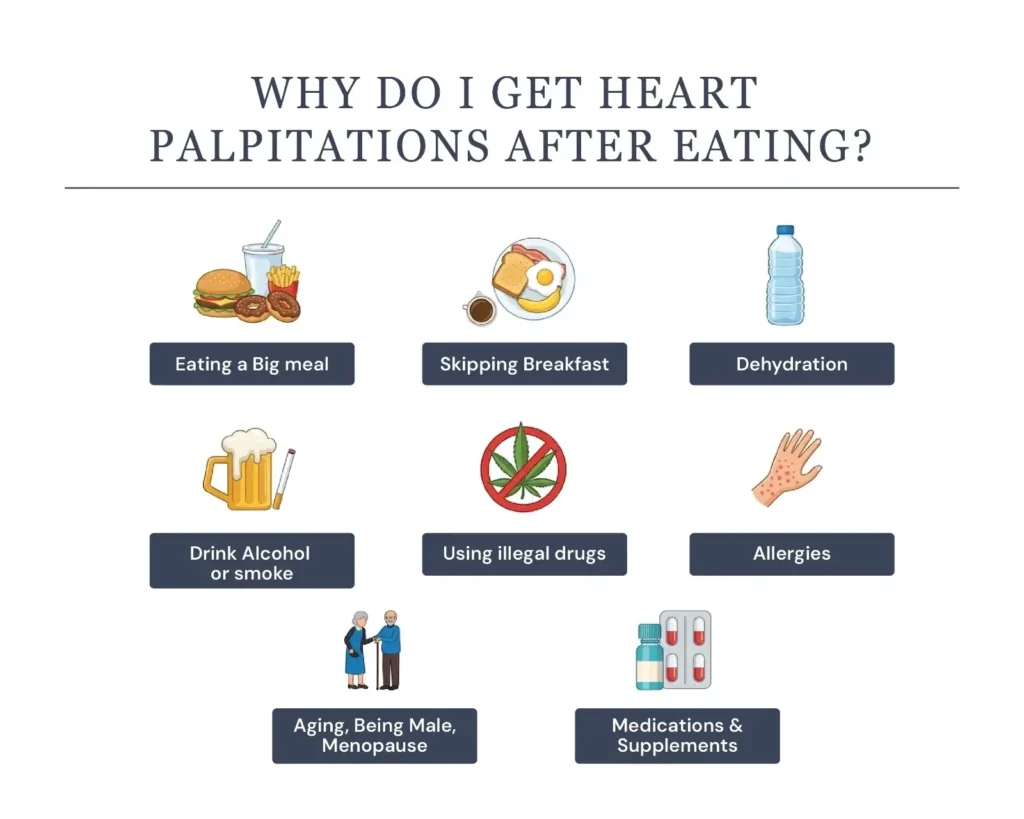
- Constipation
- Bloating and Digestive Pressure
- Lying Immediately After a Heavy Meal
- Certain Medications
- Gallbladder Function Issues
Note: Identifying your triggers can help you manage post-meal heart palpitations more effectively.
How to Stop Palpitations After Eating? Expert Clinical Insights
Here are some simple and effective ways to help prevent or stop heart palpitations after eating:
- Avoid large meals and opt for smaller portions throughout the day. It helps prevent blood sugar spikes that can trigger a racing heartbeat.
- Stay well hydrated – drink at least 8-10 glasses of water daily to maintain a healthy balance of electrolytes, which is essential for a stable heart rhythm.
- Limit alcohol and caffeine intake as they both can act as stimulants and cause the heart to skip a beat, race, or flutter, especially in sensitive individuals.
- Reduce high-fat and oily foods to support better digestion and overall cardiovascular health, reducing the risk of palpitations.
- Don’t lie down immediately after having a meal – give your body time to digest food properly. Lying down immediately after a meal can increase pressure on your chest and diaphragm. Potentially triggering the symptoms for night-time palpitations.
- Stress can disrupt normal heart rhythm. Techniques such as yoga, meditation, and deep breathing can help calm the nervous system and reduce frequency.
Book Your Cardiology Appointment Online
When to Worry About Palpitations and Seek Medical Advice?
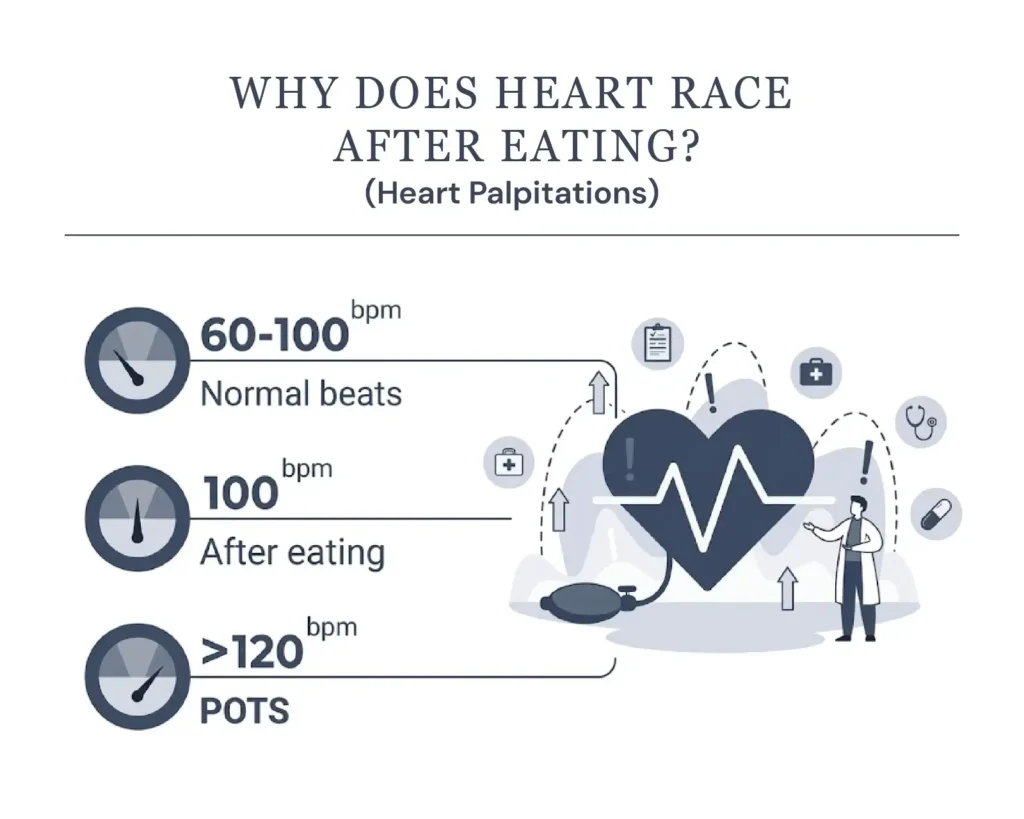
If you experience frequent or worsening heart palpitations after eating, it’s important to consult a healthcare professional. Seek urgent medical advice if your symptoms are accompanied by chest pain, breathlessness, dizziness, fainting, or if you have a family history of cardiovascular disease.
A timely evaluation can help identify the underlying cause and prevent potential complications. Your doctor may recommend initial tests such as an ECG or echocardiogram, and in some cases, extended heart rhythm monitoring using a Holter device to capture irregularities that may not appear during a routine check.
Read More: Natural Ways to Stop Ectopic Beats Quickly
If you are experiencing persistent or unexplained symptoms, booking a consultation with an experienced heart specialist like Dr Francesco Lo Monaco can help you assess your condition more efficiently through advanced diagnostic testing and Holter monitoring and ensure accurate diagnosis and proper treatment.
Bottom Line
If heart palpitations after eating are becoming more frequent, severe, or interfering with your daily life activities, it’s important to seek an urgent medical checkup. Don’t ignore the symptoms and consult with an experienced physician, preferably a cardiologist, to identify the cause and prevent complications.
If you are based in London or nearby, you can book a consultation with Dr Lo Monaco, a leading heart specialist on Harley Street, London, and get expert guidance either physically or by booking an online video consultation.
Contact Us to Book Your Consultation
Disclaimer
The information provided in this blog is for general information and educational purposes only. The content is not intended to be a substitute for professional medical advice, diagnosis, or treatment. Always seek the advice of your GP or a qualified medical professional regarding any medical condition. If you are experiencing a medical emergency, please contact emergency services immediately.