
Stages of Hypertension: BP Chart, Ranges, and NICE Guidelines
Hypertension, also known as high blood pressure, is a widespread condition where the blood pressure in your arteries becomes consistently elevated. Around 1 in 3 adults in the UK (around 16 million) is affected, with many remaining undiagnosed for years until serious cardiovascular complications arise, such as a heart attack or stroke.
According to the 2023 European Society of Hypertension (ESH) guidelines, blood pressure readings of 140/90 mmHg or higher are classified as hypertension. Understanding the different stages of hypertension is a crucial first step in effective management. Moreover, identifying your BP patterns and stage can help reduce the risk of hypertensive crises and bring it back to the normal range.

Don’t Wait Weeks for Answers
Get fast, specialist-led heart checks with same-day or quick appointments
How to Measure and Record Your Blood Pressure?
Blood pressure is measured using a sphygmomanometer or a digital blood pressure monitor. A cuff is wrapped around your upper arm that inflates and deflates according to the pressure in the arteries. For accurate results, it’s important to sit comfortably, keep your arm supported at heart level, and remain still while the reading is taken.
Understanding Blood Pressure Readings
Blood pressure is measured in millimitres of mercury (mmHg) and is recorded as 2 numbers:
Systolic Pressure: This is the higher number, representing the pressure in your arteries when your heart beats and pumps blood around your body.
Diastolic Pressure: This is the lower number, showing the pressure in your arteries between heartbeats, when your heart is resting and refilling with blood.
What is Normal Blood Pressure?
A normal blood pressure reading is typically around 120/80 mmHg or below, and if you are above 80 years, 130/90 mmHg may also be considered normal. However, it’s important to understand that blood pressure is not just a fixed number. Dr Francesco Lo Monaco, a preventive cardiologist, explains that blood pressure represents a constant biological load on your arteries, heart muscle, and brain, changing minute by minute and year by year.
It means two individuals with the same BP reading can have completely different health outcomes, depending on their overall health and risk factors.
In the United Kingdom, around 1 in 3 adults have hypertension with readings above 140/90 mmHg, and millions remain unaware of their condition for years. Recognising what’s normal and what’s not is essential for protecting your long-term cardiovascular health.
Average Blood Pressure by Age
| Men | Women | |
| 18-39 Years | 119/70 mmHg | 110/68 mmHg |
| 40-59 Years | 124/77 mmHg | 122/74 mmHg |
| 60+ Years | 133/90 mmHg | 139/90 mmHg |
Blood Pressure Chart Showing Stages of High Blood Pressure
Stages of Hypertension According to the American College of Cardiology
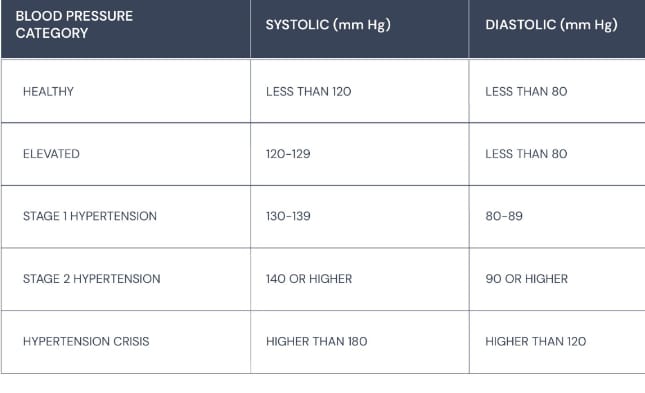
According to the American College of Cardiology, blood pressure can be categorised into 4 stages mentioned below:
Normal Blood Pressure
A systolic blood pressure reading less than 120 mmHg and a diastolic pressure less than 80 mmHg is considered healthy and normal.
Elevated Blood Pressure (Pre-hypertension)
Elevated blood pressure refers to a condition in which systolic BP readings consistently range between 120 and 129 mmHg, while diastolic BP is below 80 mmHg. Although not classified as hypertension, this stage signals an increased risk of developing high blood pressure if left unmanaged. Early lifestyle changes, such as improving diet, increasing physical activity, and reducing stress, can help prevent progression.
Stage 1 Hypertension (Moderate)
The American College of Cardiology categorises stage 1 hypertension as the systolic BP reading between 130 and 139 mmHg and diastolic readings between 80 and 89 mmHg. At this stage, structured lifestyle modifications are essential, and medical advice may be recommended to lower the risk of serious complications such as heart disease and stroke.
Stage 2 Hypertension (Severe)
A consistent blood pressure range of 140/90 mmHg or above is classified as stage 2 hypertension by the American College of Cardiology. People with stage 2 hypertension are usually recommended medication along with lifestyle changes to prevent cardiovascular complications.
Stage 3 or Hypertensive Crises
A hypertensive crisis is a ‘medical emergency’ that occurs when blood pressure rises to 180/120 mmHg or higher. At this level, there is a significant risk of serious complications, including heart attack, stroke, or organ damage. Immediate medical attention is required, especially if symptoms such as chest pain, shortness of breath, back pain, vision changes, or dizziness are present. Prompt evaluation and treatment are essential to prevent life-threatening consequences.
What the NHS and NICE Say?
According to the National Health Service UK, consistent BP readings of 140/90 or higher in a clinical setting and 135/85 or higher when measured at home may indicate hypertension.
The British National Institute for Health and Care Excellence recommends ambulatory blood pressure monitoring (ABPM) if clinical readings fall between 140/90mmHg and 180/120 mmHg to get a clearer picture by tracking blood pressure over 24 hours. Persistently elevated levels should not be ignored and must be managed through consulting with a hypertension specialist, alongside appropriate lifestyle modifications.
What if Blood Pressure Reading Falls into Different Stages?
It’s common for systolic and diastolic readings to fall into different categories. Blood pressure classification is based on the higher of the two values. For example, a reading of 130/75 mmHg includes a systolic value in the Stage 1 hypertension range, even though the diastolic value is normal. In this case, the overall classification would be Stage 1 hypertension.
Hypertensive Urgency Vs Hypertensive Emergency
| Features | Hypertensive Urgency | Hypertensive Emergency |
| Blood Pressure Level | More than 180/120 mmHg | More than 180/120 mmHg |
| Symptoms | Usually, no noticeable symptoms | May include chest pain, headaches, breathlessness, dizziness, or vision changes |
| Risk Level | High, but not immediately life-threatening | Life-threatening condition |
| Treatment Approach | Gradual blood pressure reduction with medicine and lifestyle changes | Immediate hospitalisation with intravenous medications |
| Urgency of Care | Requires prompt medical review | Requires emergency medical treatment |
Lifestyle Changes to Manage Hypertension
Making the right lifestyle changes can have a powerful impact on controlling high blood pressure and reducing long-term cardiovascular risk. These adjustments are especially effective in the early stages, such as Stage 1 hypertension. However, if your blood pressure is consistently high, particularly in Stage 2 or above, it’s important to consult your GP for a personalised treatment plan.
Here are some simple lifestyle tips to lower blood pressure effectively:
- Maintain a healthy weight
- Quit smoking
- Reduce your salt intake
- Eat a balanced, heart-healthy diet
- Limit alcohol consumption
Worried About High Blood Pressure? Take the Next Step
High blood pressure often develops silently, but its long-term impact on your heart and overall health can be serious. Understanding your readings, recognising the stages, and taking early action can make a significant difference.
If you’re concerned about consistently high blood pressure or need expert guidance, book your consultation with Dr Francesco Lo Monaco to get a clear diagnosis and a personalised plan to manage your risk effectively.
Disclaimer
The information provided in this blog is for general information and educational purposes only. The content is not intended to be a substitute for professional medical advice, diagnosis, or treatment. Always seek the advice of your GP or a qualified medical professional regarding any medical condition. If you are experiencing a medical emergency, please contact emergency services immediately.