
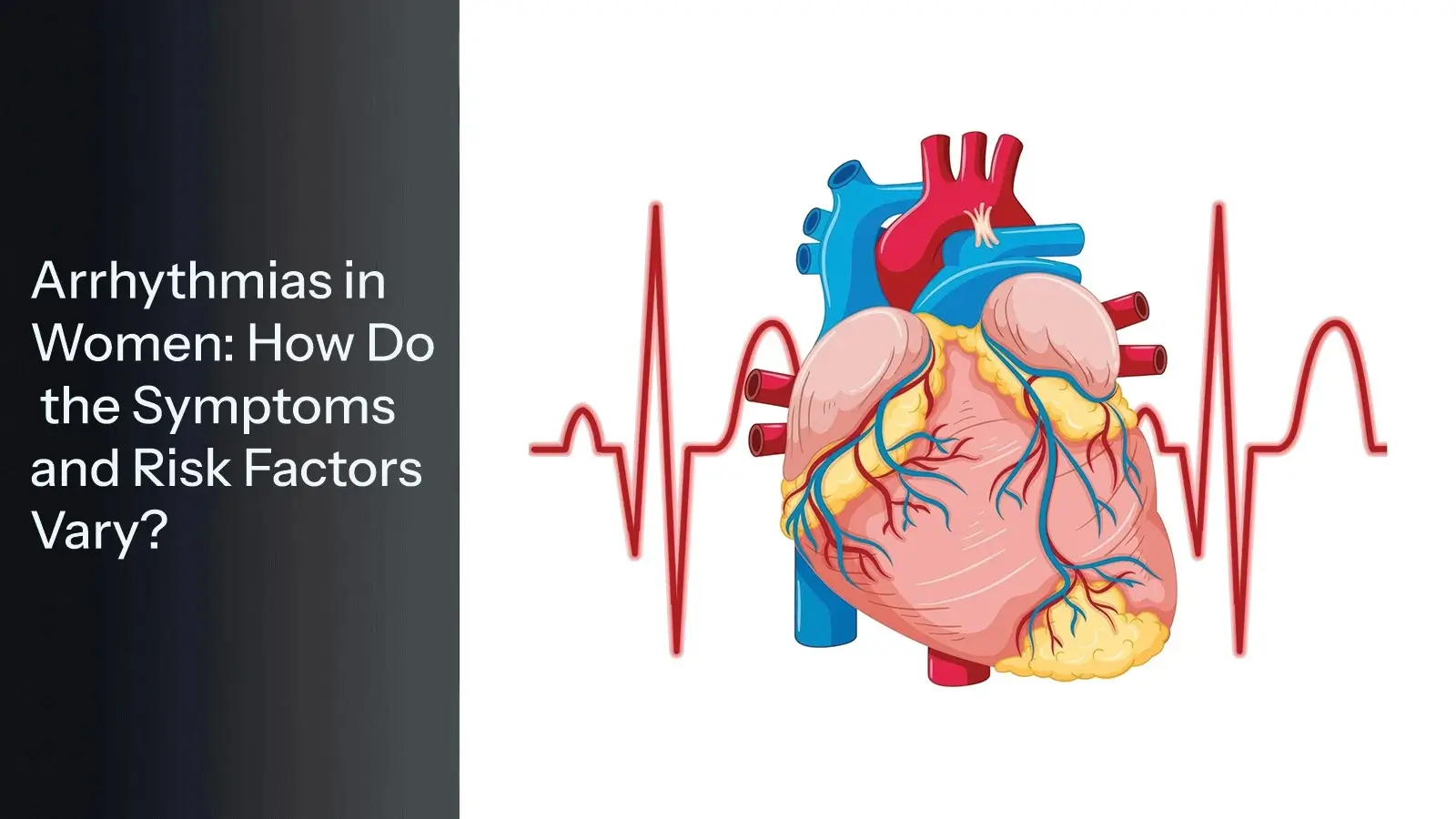
Arrhythmias in Women: Do Symptoms, Diagnosis, Treatment Vary?
Do you know that around 2 million people in the UK are affected by abnormal heart rhythms, known as arrhythmias? According to the British Heart Foundation, cases of atrial fibrillation among UK patients have risen by an estimated 50% over the past decade.
While arrhythmias affect both men and women, research indicates that prevalence is lower in women (373 per 100,000) than in men (596 per 100,000). However, symptoms, diagnosis, and treatment can differ between the two, making it essential to understand these differences for more effective management.
Here, we’ve explained how arrhythmias present differently in women, what specific symptoms to look out for, and why diagnosis can be more complicated. So, let’s dive into the details!

Don’t Wait Weeks for Answers
Get fast, specialist-led heart checks with same-day or quick appointments
Arrhythmias in Women: How Symptoms Can Vary?
Irregular heartbeat, or arrhythmia, often goes unnoticed in women due to subtle and atypical ways symptoms present. It can make the condition riskier for women and may lead to complications over the long term. Common symptoms include:
- Irregular pulse, such as missed or extra beats without any pattern
- Unusual fatigue that doesn’t recover after plenty of rest.
- Weakness, dizziness, or in some cases, fainting
- Symptoms that mimic anxiety or hormonal imbalance
- Chest discomfort that’s often mistaken for stress or tiredness
- Shortness of breath
Because these symptoms are so easy to miss or misattribute, many women go undiagnosed for months, or even years.
If your symptoms are vague, infrequent, or come and go without warning, a standard ECG taken during a single appointment may not catch them at all. This is where a Holter monitor becomes valuable; it’s worn continuously (usually for 24-48 hours) to record your heart’s activity as you go about daily life, capturing irregularities that might otherwise be missed.
Dr. Francesco Lo Monaco, an expert consultant cardiologist in London, offers Holter monitoring for women experiencing these unexplained symptoms, helping you get a clear, accurate picture of what’s happening with your heart rhythm.
Book Your Holter Monitor Today
Risk Factors for Cardiac Arrhythmia in Females
Certain gender-specific factors can increase women’s risk of developing heart rhythm disorders. Hormonal disturbances, especially during pregnancy, menopause, PCOS, thyroid disorder, and menstrual cycles, are some distinguishing factors make arrhythmias somewhat different in men vs women.
Moreover, women often ignore the common signs considering them non-cardiac, stress-related issues, which makes the issue worse with time.
Longer QT intervals, a heart rhythm measurement, are more common in women and can make the condition more prone to life-threatening arrhythmias. Proper diagnosis and accurate treatment are what arrhythmia management requires.
Common Heart Rhythm Disorders in Women
Sick sinus syndrome, SVT, Atrioventricular nodal re-entry tachycardia (AVNRT), and Postural orthostatic tachycardia syndrome are more common heart rhythm disorders in women than in men. In fact, AVNRT is the most common type of SVT in women – twice as common in women as in men.
Atrial Fibrillation is more common in men, but after age 75, approximately 60% of patients affected are women. Moreover, the risk of stroke with AF is higher in women than in men.
Why Early Diagnosis is Crucial?
Many arrhythmia symptoms go unnoticed simply because they’re mistaken for something else – mild fatigue, hormonal changes, or everyday stress rather than a cardiac issue. The demands of managing work, home, and family life often push these warning signs further down the priority list.
But timely diagnosis is critical. Catching an arrhythmia early makes it far easier to manage effectively and helps prevent long-term cardiovascular complications down the line.
If you’re based in London or anywhere across the UK, Dr. Francesco Lo Monaco, a consultant cardiologist specialising in arrhythmias and electrophysiology, can help you get answers. He offers both in-person and online consultations for patients throughout the UK.
Depending on your symptoms and overall health, he may recommend diagnostic tests such as an ECG, echocardiogram, Holter monitor, or stress test, and build a treatment plan tailored to your needs. Dr. Lo Monaco also provides guidance on heart-healthy lifestyle changes to support your long-term cardiovascular wellbeing.
Also Read: 24 Hour Vs 48 Hour Holter Monitoring
How Do the Treatment Options for Arrhythmias in Women Differ?
Effective arrhythmia treatment isn’t one-size-fits-all, and this is especially true for women. Personalised care matters because women often experience arrhythmias differently, which can affect how well certain treatments work.
Advanced treatment options, such as catheter ablation, pacemaker implantation, and device therapies are often used to treat arrhythmias based on each patient’s specific condition. Moreover, lifestyle modifications, dietary adjustments, and stress management play a significant role in minimising the triggers and managing symptoms effectively.
Lifestyle Changes to Manage Arrhythmia Symptoms
Conclusion
Heart rhythm disorder affects both genders, but arrhythmias in women are considered a bit complicated to diagnose and treat. If your heartbeat feels irregular or your symptoms are becoming more frequent or severe, don’t wait for long. Book your consultation with Dr Francesco Lo Monaco and get the clarity your heart health deserves. Contact us to book your appointment.
Disclaimer
The information provided in this blog is for general information and educational purposes only. The content is not intended to be a substitute for professional medical advice, diagnosis, or treatment. Always seek the advice of your GP or a qualified medical professional regarding any medical condition. If you are experiencing a medical emergency, please contact emergency services immediately.