
Atrial Flutter Vs Atrial Fibrillation: What’s the Difference?
Atrial Flutter and Atrial Fibrillation are types of cardiac arrhythmia that differ in the organisation of electrical activity. They occur when the electrical signals responsible for the contraction of heart chambers occur faster than normal. Both share many symptoms, but they are distinct conditions with different electrical patterns, risks, and treatment options. In this guide, we explain the key differences between atrial flutter and atrial fibrillation – how each condition affects your heart’s electrical system, what to look for on an ECG, how common each one is, and what your treatment options are.

Don’t Wait Weeks for Answers
Get fast, specialist-led heart checks with same-day or quick appointments
How the Heart Works? Understanding a Cardiac Beat
The heart has four chambers: two upper chambers, called the atria, and the two lower chambers, called the ventricles. In a healthy heart, each beat follows a precise electrical sequence, i.e., the atria contract first, pushing blood into the ventricles, which then pump it to the lungs and the rest of the body. At rest, the heart beats between 60 and 100 times per minute.
In both atrial flutter and atrial fibrillation, this electrical sequence becomes disrupted. While some episodes are brief and resolve on their own, persistent or recurring arrhythmias can place significant strain on your heart. If left unaddressed for long, it can raise the risk of serious complications, including stroke and heart failure.
Atrial Flutter Vs Atrial Fibrillation: What are the Key Differences?
Atrial Flutter (AFL)
Atrial Flutter is a heart rhythm disorder in which the upper chambers of the heart, the atria, beat too fast (300-350 beats per minute) but in an organised way. As a result, the heart’s lower chambers, the ventricles, also pump faster but can’t contract at the same pace as the atria, causing an irregular heart rhythm.
Know More About Atrial Flutter
Atrial Fibrillation (AFib)
Atrial Fibrillation is another form of heart rhythm disorder in which electrical signals start becoming more chaotic and disorganised. It causes the atria to fibrillate or quiver and the heartbeat to be very fast. As a result, the ventricles can no longer pump blood around the body, putting the heart under strain. Atrial Fibrillation is a more common type of arrhythmia and is more commonly observed in men than in women.
Know More About Atrial Fibrillation
Symptoms of AFL and AFib
One of the most concerning aspects of both atrial flutter and atrial fibrillation is that they can be completely silent. Some people live with either condition for years without realising anything is wrong. When symptoms do appear, they tend to overlap significantly between the two conditions, making them complicated to diagnose.
The most important distinction is in the pulse: atrial flutter typically produces a fast but regular rhythm, whereas atrial fibrillation produces a fast and irregularly irregular rhythm. Common symptoms may include:
- Heartbeat faster than normal
- Palpitations
- Dizziness or fainting
- Persistent and extreme fatigue
- Shortness of breath
- Chest pain or tightness
What Causes Atrial Flutters?
While atrial fibrillation tends to be more prevalent and persistent than atrial flutter, both conditions share many of the same underlying triggers and risk factors, including:
- Heart disease or a history of cardiac surgery
- High blood pressure
- Congenital heart defects
- Recent cardiac surgery
- Overactive thyroid
- Chronic lung disease
- Excessive alcohol consumption
It is important to mention here that these conditions may not always have a clear cause. Sometimes, a healthy individual may also develop these arrhythmias. A comprehensive cardiology assessment is the only reliable way to get an accurate diagnosis.
Atrial Flutter Vs Atrial Fibrillation: How Do They Look on an ECG?
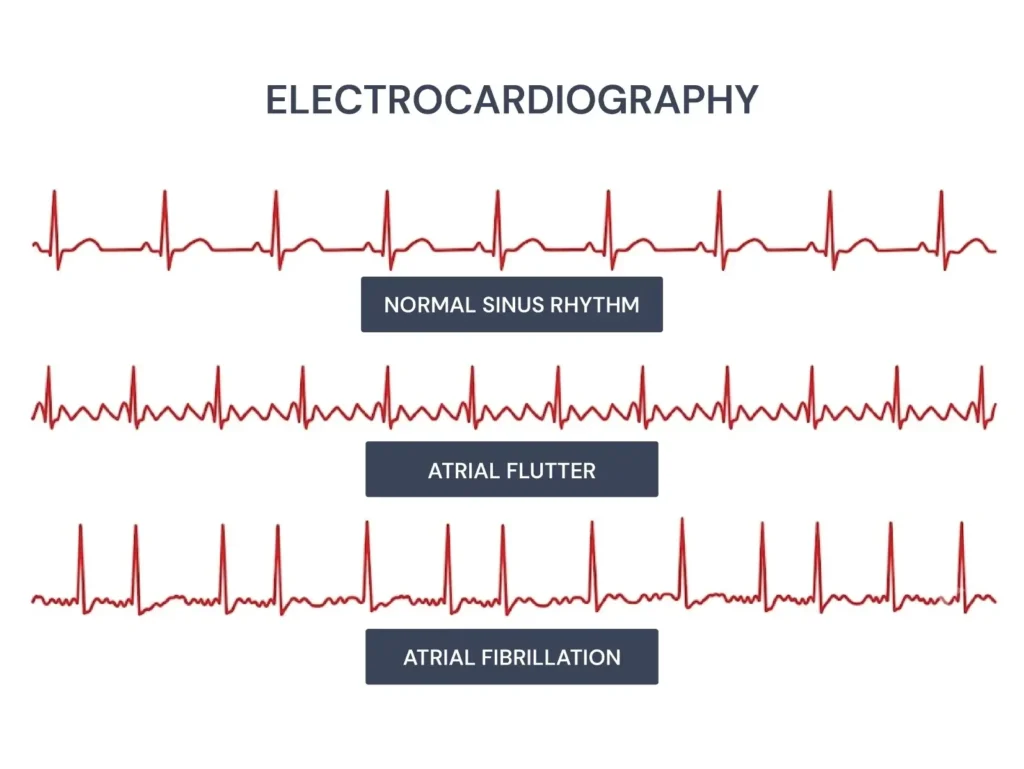
An ECG (electrocardiogram) is the key diagnostic tool for distinguishing between the two conditions. Atrial flutter produces a characteristic ‘sawtooth pattern’, a regular, rapid series of flutter waves. Atrial fibrillation shows a chaotic, wavy baseline with no organised pattern, reflecting the disorganised electrical activity taking place in the atria.
Detailed Guide to atrial Fibrillation ECG
AFib Vs AF: A Quick Overview
| Atrial Flutter | Atrial Fibrillation | |
| Rhythm Pattern | Rapid but organised | Rapid and chaotic rhythm |
| Prevalence | Less common (1 in 100 people in the UK) | More common (1 in 45 people in the UK) |
| Risks | Can lead to complications, like heart failure or stroke | Higher risk of complications |
| ECG Appearance | Sawtooth pattern | Chaotic, wavy baseline |
| Atrial Rate | 200-350 beats per minute | 350-600 beats per minute |
What are the Treatment Options?
While treating AFib and AFL, the goal is to restore the heart’s normal rhythm and prevent blood clots. Therefore, your cardiologist often starts with guided lifestyle modifications and medicines, such as beta blockers, calcium channel blockers, anti-arrhythmic drugs, or blood-thinning medicines. In case medicines alone don’t work or reduce the symptoms, the following treatment options may be used:
- Catheter ablation
- Electrical cardioversion
- Atrioventricular (AV) node ablation
Bottom Line
Understanding the difference between atrial flutter and atrial fibrillation is the first step towards getting the right care. While both conditions share similarities, they require careful, expert evaluation to diagnose and treat effectively. If you have concerns about your heart rhythm, don’t leave them unaddressed. Consult Dr Francesco Lo Monaco, a leading cardiologist based in London, and get the clarity and care your heart deserves.
Disclaimer
The information provided in this blog is for general information and educational purposes only. The content is not intended to be a substitute for professional medical advice, diagnosis, or treatment. Always seek the advice of your GP or a qualified medical professional regarding any medical condition. If you are experiencing a medical emergency, please contact emergency services immediately.