

Lifestyle Changes to Manage Arrhythmia and Irregular Heartbeat
Arrhythmia, the prevalent heart rhythm disorder, causes your heart to beat too fast or too slow. Treatments vary based on your daily routine and symptoms; however, minor, infrequent issues can be easily managed by understanding your triggers and making lifestyle adjustments accordingly.
In some people, caffeine, alcohol, poor sleep, and stress can trigger or worsen irregular heartbeats. By making small, consistent lifestyle changes, such as avoiding stimulants, managing stress, improving sleep quality, and staying active, a person can reduce or even prevent long-term cardiovascular complications.
In this blog, we have covered practical steps and lifestyle changes to help manage arrhythmia and protect long-term heart health. So, let’s explore the key factors in detail!.
What is Arrhythmia and How Can Lifestyle Affect it?
Arrhythmia is an abnormal heart rhythm, where your heart beats too fast, too slow, or in an irregular pattern. Arrhythmias can be of different types, such as atrial fibrillation, atrial flutter, supraventricular tachycardia, and bradycardia. Each type varies in occurrence, symptoms, and treatments.
Often harmless, but if not properly managed for a long time, it can lead to major cardiovascular complications. Unhealthy lifestyle factors such as obesity, hypertension, sleep apnoea, and excessive alcohol intake can trigger or worsen abnormal rhythm.
By understanding and managing your triggers, you can reduce arrhythmia and improve overall heart health.
Also Read: How do arrhythmias in women vary from men?
10 Lifestyle Changes to Manage Arrhythmia Naturally
A healthy lifestyle keeps your cardiovascular system strong and helps prevent chronic heart issues like arrhythmias. If you are experiencing any arrhythmia symptoms, such as palpitations, irregular heartbeat, or breathlessness, it’s better to consult with a cardiologist for expert personalised guidance.
Here are a few lifestyle recommendations to treat your irregular heartbeat:
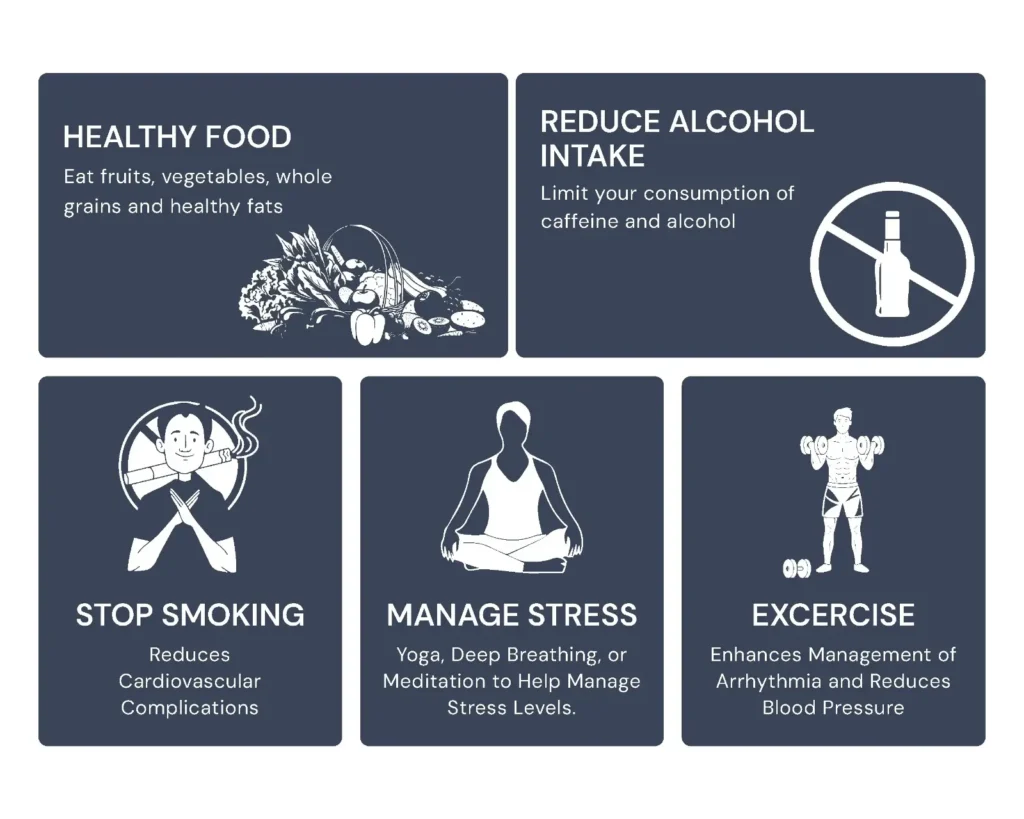
Eat a Heart-Healthy Diet
Your diet directly affects your overall cardiovascular system, including heart and blood vessels. Fruits, vegetables, whole grains, and lean proteins supply nutrients that support stable heart function. Foods rich in potassium and magnesium can help regulate electrical signals that control your heartbeat.
Fatty fish like salmon and mackerel provide omega-3s that reduce inflammation and support heart health. Processed foods, excess salt, and added sugars can strain the cardiovascular system over time. Building meals around whole, unprocessed ingredients gives your heart the fuel it needs to function properly.
Learn More: Heart-Healthy Diet to Improve Cardiovascular Fitness
Stay Physically Active
Regular physical activity strengthens your heart muscle and improves circulation throughout your body. It is one of the most effective ways to manage an ideal weight, control high blood pressure, and manage heart rhythm disturbances. A 30-minute daily physical activity that includes walking, jogging, cycling, or training exercises can reduce strain on your cardiovascular system, thus helping reduce arrhythmia symptoms and improve your cardiac health over time.
If you have a family history or symptoms of a heart condition, we recommend consulting your cardiologist before following a new fitness routine. Remember, consistency matters more than intensity when building long-term heart health through movement.
Stay Hydrated
Dehydration can affect your body’s electrolyte balance and make some people more prone to palpitations or irregular heart rhythms. Try drinking enough water throughout the day, particularly during hot weather. If you have a health condition that requires fluid restriction, follow your doctor’s advice on daily fluid intake.
Limit Caffeine and Alcohol
Caffeine and alcohol can trigger arrhythmias in some people. Caffeine stimulates the nervous system and may increase the risk of irregular heartbeats. Alcohol can disrupt the heart’s electrical activity and, in some cases, trigger episodes of atrial fibrillation. Reducing or avoiding these beverages may help improve symptom control, depending on your individual triggers.
Expert Insight from Dr Francesco Lo Monaco:
“If your blood pressure is well controlled, your heart rhythm is normal, and you tolerate caffeine well, moderate coffee can be part of a heart-healthy lifestyle. However, if you have high blood pressure, heart rhythm problems, or are sensitive to caffeine, green tea is comparatively the better choice.”
Manage Stress
Chronic stress can be another reason for cardiac rhythm disorder. Managing stress with healthy lifestyle habits, such as meditation, deep breathing, and yoga, can help calm your nervous system and improve mood. Make relaxation part of your daily routine to protect both your mental and physical health.
Prioritise Quality Sleep
Poor sleep disrupts the autonomic nervous system that regulates your heartbeat. Sleep apnoea can raise your risk of rhythm disorders, especially atrial fibrillation. Daily 7-8 hours of quality sleep is necessary to support your heart for stable functioning.
Sleep apnoea is often an overlooked health issue. Watch for loud snoring, gasping during sleep, and daytime fatigue, since these signal a possible sleep disorder worth investigating.
Quit Smoking and Vaping
Smoking and vaping both have a negative impact on your heart health and rhythm. Nicotine stimulates the nervous system, increases your heart rate, and makes some people more susceptible to arrhythmias. Long-term tobacco use can also increase the risk of heart disease, heart attack, and stroke. Quitting smoking and vaping is an effective way to protect your heart and improve overall cardiovascular health.
Also Read: Can Vaping Cause Heart Problems?
Maintain a Healthy Weight
Managing a healthy weight can significantly reduce the risk of heart disease. Obesity or being overweight is one of the leading factors behind high blood pressure, diabetes, high cholesterol, and sleep apnoea. All of these abnormal rhythm disorders can cause arrhythmias. A balanced diet along with regular exercise can help achieve healthy, long-term weight loss. Make gradual, consistent changes to protect your heart while working toward a healthier weight.
Try Vagal Manoeuvre (When Appropriate)
Vagal manoeuvres are simple, physical techniques that stimulate the vagus nerve and slow down the heartbeat. The vagus nerve is the main nerve of the parasympathetic nervous system (PNS), an autonomic nervous system responsible for relaxing the body after stress or danger. It lowers blood pressure and slows the heart rate, thus helping settle into a relaxed state. Some common examples of vagal manoeuvres are:
- Carotid Sinus Massage: Massaging the carotid artery for a few seconds
- Valsalva Manoeuvres: Outward breathing against closed airways.
- Splashing face with ice-cold water
- Coughing
- Activating your gag reflex
- Performing a handstand for 30 seconds
Please note: Vagal maneuvers may not be ideal for everyone. If you have a heart condition or a family history of heart disease, it’s important to discuss with a cardiologist before trying a vagal manoeuvre.
Manage Underlying Health Conditions
If you are suffering from a health condition, such as diabetes, high BP, raised cholesterol levels, thyroid disorder, or any other cardiovascular issue, managing that health condition can help reduce the severity and frequency of arrhythmia.
When to See a Cardiologist?
Occasional palpitations can be harmless, but persistent or recurring symptoms should never be ignored. While some arrhythmias last only a few seconds or minutes and resolve on their own, others may require prompt medical assessment and treatment to reduce the risk of serious complications. You should arrange an appointment with your cardiologist if you experience:
- Frequent or prolonged episodes of a racing, pounding, fluttering, or irregular heartbeat.
- Dizziness, light-headedness, or fainting (syncope)
- Chest pain or discomfort accompanied by a disturbed heartbeat
- Shortness of breath, particularly at rest or during mild physical activity
- Palpitations that are becoming more frequent, more severe, or occur alongside other symptoms.
Conclusion
Healthy lifestyle changes can play an important role in managing arrhythmia symptoms and supporting long-term heart health. However, persistent palpitations, dizziness, chest pain, or other signs of an irregular heartbeat should always be assessed by an experienced cardiologist. If you’re concerned about your heart rhythm, book a consultation with Dr Francesco Lo Monaco, an experienced preventive cardiologist in London. An online consultation facility is also available across the UK.
Frequently Asked Questions
Disclaimer
The information provided in this blog is for general information and educational purposes only. The content is not intended to be a substitute for professional medical advice, diagnosis, or treatment. Always seek the advice of your GP or a qualified medical professional regarding any medical condition. If you are experiencing a medical emergency, please contact emergency services immediately.