
Stroke Vs Heart Attack: Symptoms, Causes, and Risks
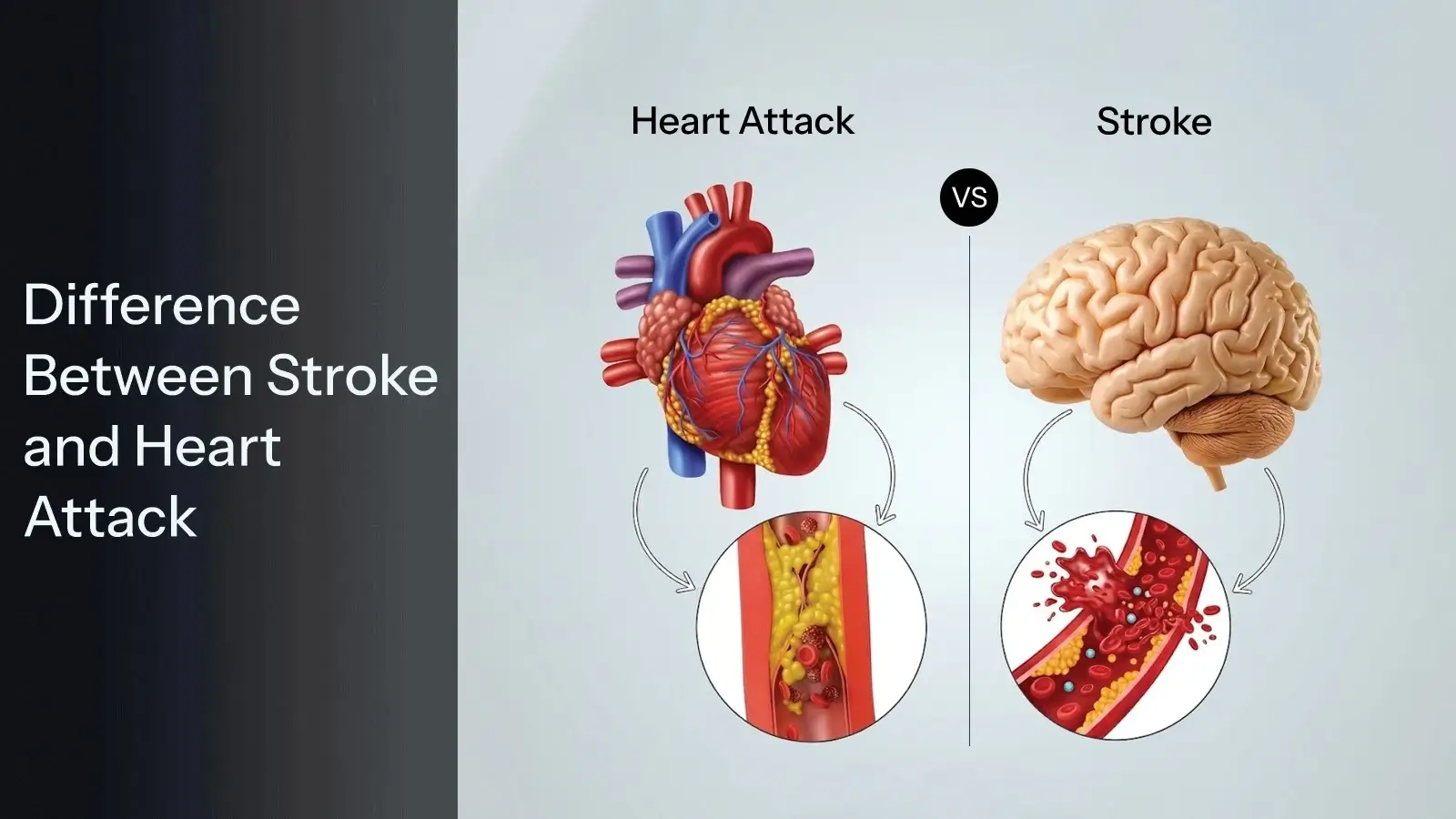
Stroke and heart attack are distinct medical emergencies caused by a sudden blockage in blood flow. A stroke is usually caused by an interruption in blood flow to the brain, while a heart attack due to a sudden cut-off in blood flow to the heart. Understanding the critical differences between a stroke and a heart attack is important to take the immediate essential steps when experiencing these conditions to prevent any complications.
What is a Stroke?
A stroke, also known as a brain attack, is a time-critical emergency in which blood flow to the brain is disrupted. It reduces or completely blocks the supply of oxygen and nutrients to the brain, causing immediate damage to brain cells that can result in lasting problems with speech, movement, or memory.
Signs and Symptoms of Stroke
- Face drooping
- Numbness in your face or limbs, especially on one side of the body.
- Sudden confusion
- Dizziness
- Blurred or impaired vision in one or both eyes.
- Difficulty walking or maintaining balance
- Difficulty speaking or understanding speech
Types of Stroke
Ischaemic Stroke: This occurs due to a blockage in a blood vessel supplying the brain due to a blood clot or plaque. The blockage reduces blood flow and oxygen supply to the brain, damaging brain cells. Common symptoms include facial drooping, numbness or weakness, and difficulty speaking. An ischaemic stroke is a medical emergency.
Hemorrhagic Stroke: This occurs when a blood vessel in the brain ruptures, causing bleeding in the surrounding tissues. The bleeding puts pressure on brain tissue and damages brain cells. Symptoms may include a sudden, severe headache, weakness, difficulty walking or speaking, and reduced consciousness. A haemorrhagic stroke is also a medical emergency.
Transient Ischemic Attack (TIA): Often called a mini-stroke. It can occur due to a temporary disruption of blood flow to the brain, causing sudden weakness, numbness, facial drooping, or difficulty speaking. Symptoms usually resolve within minutes or hours, but it can be a warning sign of a future stroke and requires urgent medical assessment.
What to Do If Someone Suffers a Stroke? Act F.A.S.T
Stroke is a medical emergency; therefore, every moment matters in accessing urgent care. Recognising the warning signs and seeking immediate medical attention can help reduce brain damage and the risk of long-term complications.
Remember the F.A.S.T. acronym to recognise the signs of a stroke:
- Face: Is one side of the person’s face drooping? Ask them to smile.
- Arms: Does one arm drift downward while raising both arms?
- Speech: Is their speech slurred or unclear? Can they repeat a simple sentence?
- Time: If you notice any of these signs, call 999 immediately in the UK. Do not wait for symptoms to improve, even if they disappear.
What is a Heart Attack?
A heart attack, or myocardial infarction, occurs when blood flow to the heart is disrupted due to plaque buildup in the coronary arteries. This blockage in blood flow can lead to damage or death of the heart muscle cells. Quick intervention is essential to remove the blockage and avoid complications.
Signs and Symptoms of a Heart Attack
Symptoms of a heart attack can vary from person to person. Common warning signs include:
- Chest discomfort or pain, often in the centre or left side of the chest, which may spread to the shoulders, arms, back, or jaw.
- A feeling of squeezing or pressure in the chest
- Shortness of breath
- Dizziness or lightheadedness
- Nausea or vomiting
Heart Attack Symptoms in Women
Women may experience the same symptoms as men, including chest pain, but some symptoms may be less obvious. These include:
- Anxiety or a feeling of unease
- Unusual or extreme fatigue
- Nausea
- Indigestion or discomfort in the lower abdomen
- Back, neck, or jaw pain
- Breathlessness
What to Do If Someone Suffers a Heart Attack?
If you suspect someone is having a heart attack, call 999 immediately. Prompt medical attention helps reduce the risk of serious complications. While waiting for the ambulance, ask the person to sit in a comfortable position. Loosen any tight clothing. If the person becomes unresponsive and is not breathing normally, call 999 and follow the instructions.
Key Differences Between Stroke and Heart Attack
| Feature | Stroke | Heart Attack |
| Visual Symptoms | Facial drooping, sudden vision changes, difficulty speaking, weakness or numbness on one side of the body. | Chest discomfort or pain spreading to the arms, jaw, neck, or back, shortness of breath, cold sweats, or nausea. |
| Causes | Occurs when blood flow to the brain is blocked by a clot (ischaemic stroke) or when a blood vessel ruptures and bleeds (haemorrhagic stroke). | Usually occurs when blood flow to part of the heart muscle is blocked, most often due to a blood clot or a fatty plaque in a coronary artery. |
| Affects | The brain, potentially affecting movement, speech, vision, memory, and other functions. | The heart muscle, potentially damaging its ability to pump blood effectively. |
Risk Factors for Stroke and Heart Attack
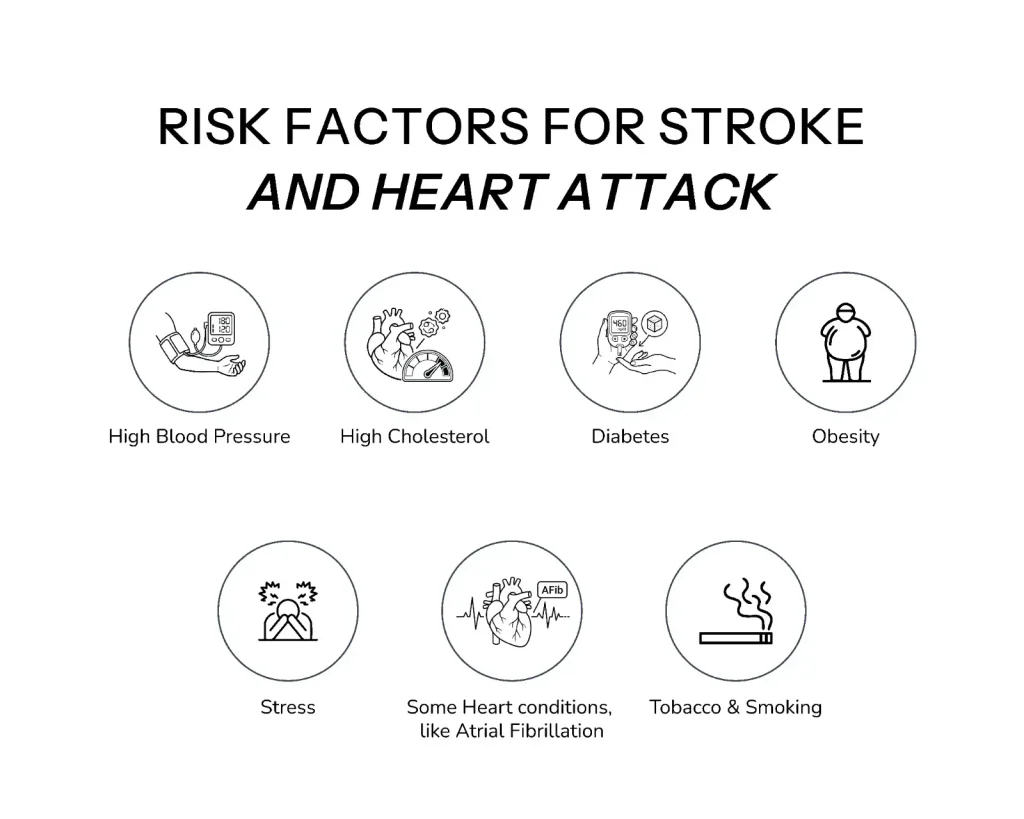
Common Risk Factors
- High blood pressure
- High cholesterol
- Obesity
- Diabetes
- Sedentary lifestyle
- Smoking
Unique Risk Factors
Some factors can specifically increase stroke risk, such as:
- Carotid artery disease
- Previous transient ischaemic attacks
- Atrial Fibrillation
- Sleep apnoea
Certain factors can raise the risk of heart attack, such as:
- Coronary artery disease
- Raised LDL cholesterol level
- Diabetes
- Obesity
- Chronic stress
- Sedentary lifestyle
Diagnosis
Diagnostic Tests for Stroke
Doctors diagnose a stroke by identifying whether blood flow to the brain has been blocked or bleeding has occurred. Common diagnostic tests to detect stroke include:
- Blood Tests
- Electrocardiogram (ECG/EKG)
- Carotid ultrasound
- CT Scan
- MRI Scan
These tests help doctors determine the type and cause of a stroke and decide the appropriate treatment.
Diagnostic Tests for Heart Attack
Common diagnostics used to detect a heart attack include:
- Blood Tests
- Electrocardiogram (ECG/EKG)
- Echocardiogram
- Chest X-ray
- Coronary Angiography
Which is Worse, a Heart Attack or a Stroke?
Both heart attacks and strokes are medical emergencies. Severity depends on the extent of the damage and the area affected, and how quickly treatment begins. Delay in treatment can be life-threatening in both conditions.
A heart attack damages the heart muscle when its blood supply is reduced or blocked, while a stroke affects the brain due to interrupted blood flow or bleeding. Both can cause long-term complications or be fatal if treatment is delayed.
General Prevention Tips
Healthy lifestyle choices can help reduce the risk of both heart attacks and strokes. Maintaining healthy blood pressure and cholesterol levels, staying physically active, and managing existing health conditions improve cardiovascular health.
Choose a Heart-healthy Diet
Choose a balanced diet rich in fruits, vegetables, whole grains, fish, poultry, legumes, nuts, and other nutrient-rich foods. Limit foods high in salt, saturated fat, and added sugar. Follow a Mediterranean-style or DASH diet to support healthy blood pressure and cholesterol levels.
Learn More About Heart-Healthy Foods
Increase Physical Activity
Regular exercise strengthens the heart, improves circulation, and helps maintain a healthy weight. Activities such as brisk walking, cycling, and swimming can support cardiovascular health. Aim for at least 150 minutes of moderate-intensity exercise or 75 minutes of vigorous-intensity activity each week. Start at a comfortable level and gradually increase your activity over time.
Avoid Smoking
Smoking damages blood vessels, increases blood pressure, and raises the risk of blood clots, heart attacks, and strokes. Quitting smoking can improve cardiovascular health and reduce these risks over time. Avoid exposure to second-hand smoke where possible.
Also Read: Can Vaping Cause Palpitations?
Maintain Healthy Cholesterol Levels
High LDL cholesterol can cause plaque buildup in the arteries, increasing the risk of restricted blood flow. A balanced diet, regular exercise, and medication (if prescribed) can help manage your cholesterol levels.
Keep Blood Pressure Under Control
Uncontrolled high blood pressure can severely damage blood vessels over time and is a major risk factor for both heart attacks and strokes. Staying physically active, reducing salt intake, and taking medicines as prescribed can help keep blood pressure under control and reduce your risk of cardiovascular complications.
Learn More: Know Your Numbers
Manage Chronic Conditions
Certain chronic conditions such as diabetes, high blood pressure, and atrial fibrillation can increase the risk of heart attacks and strokes. Managing your conditions by following your healthcare professional’s advice, taking prescribed medication as directed, and attending regular check-ups can help keep these conditions under control.
Conclusion
Understanding the difference between a heart attack and a stroke can help you recognise the warning signs and get appropriate treatment accordingly. Both are life-threatening medical emergencies, and prompt care can reduce the risk of complications. If you notice symptoms of either condition, call 999 immediately, even if the symptoms get better or seem mild.