

When to Worry About Chest Pain? 5 Warning Signs to Look For
Chest pain can be worrying, especially when you are unsure what is causing it. Although not every chest pain is critical or related to a heart problem, frequent or worsening symptoms should never be ignored. Sometimes it may be caused by acid reflux, digestive issues, or muscle strain, while others may indicate a serious condition associated with the heart or lung issues.
Knowing the warning signs can help you understand when to worry about chest pain and when to seek emergency care. Knowing what to look for is especially important because heart-related chest pain doesn’t always feel severe or appear with obvious symptoms.
How Does Chest Pain Usually Feel?
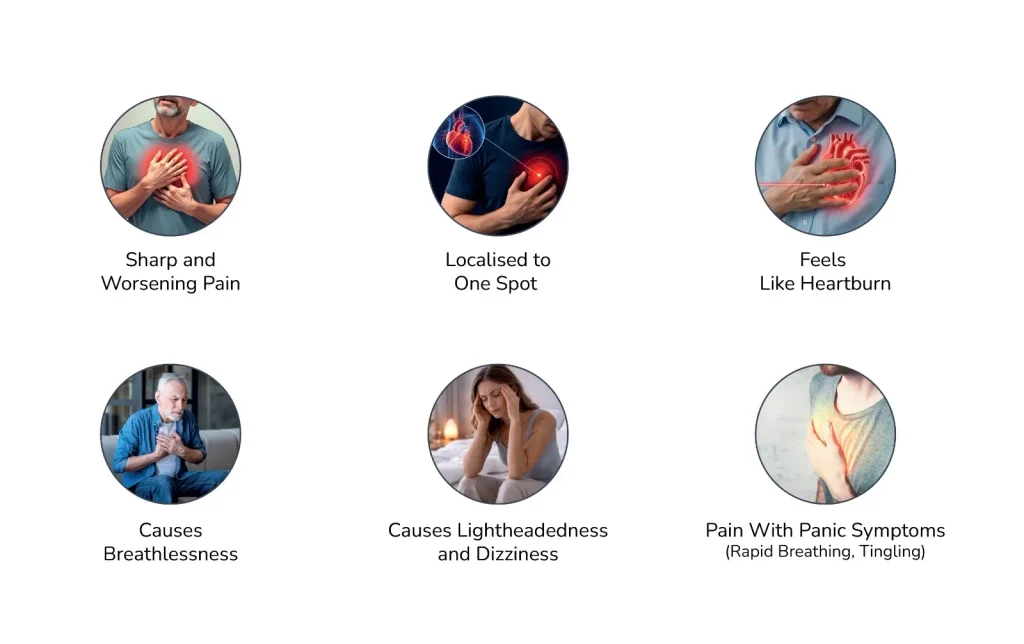
You can feel chest pain in different areas of your chest, – on the left or right side or in the centre behind the breastbone (sternum). You can feel it constantly or in waves with varying intensity.
Moreover, chest pain can be localised (in a particular area) or radiate to other parts of your body, such as the arm, jaw, shoulder, stomach, or back. It can feel like a dull ache, pressure, or tightness in the chest that is mild to severe.
Note: Seek urgent medical attention if you feel chest pain along with a sensation of squeezing or pressure, breathlessness, sweating, or pain that radiates to your left/right arm, neck, jaw, or back. Call 999 to seek emergency care.
When Is Chest Pain a Concern? 5 Warning Signs to Notice
Dizziness and Lightheadedness
Dizziness and lightheadedness can be caused by different health factors. However, if it occurs along with chest pain or discomfort, getting a complete cardiac examination is important to identify if the heart is causing the trouble.
Sweating
Chest pain with sweating can be a serious indication of heart-related issues. Seek urgent medical attention, especially if the symptoms worsen, accompany breathlessness, and you don’t feel better in a few minutes.
Shortness of Breath
Chest pain accompanied by shortness of breath can be a warning sign of a serious heart or lung condition. Seek emergency medical attention if you experience difficulty breathing, rapid or shallow breathing, or breathlessness at rest. Chest pain with sudden or severe breathlessness requires immediate medical attention, even if the pain feels mild.
Nausea
Nausea can result from various health conditions. However, when it occurs alongside chest pain, discomfort, or vomiting, it may be a warning sign of a heart attack or another serious medical problem. Seek emergency medical attention if these symptoms occur together, particularly with sweating or breathlessness.
Coughing or Wheezing
Persistent coughing or wheezing may be associated with a heart or lung condition. If these signs occur with chest pain or difficulty breathing, it’s important to seek urgent medical assessment.
Other Possible Reasons for Chest Pain
Chest pain can be alarming, and one of the first concerns many people have is whether they are having a heart attack. Although chest pain can indicate a heart problem, it can also have several other causes, ranging from digestive issues to muscle strain and lung conditions.
Some common non-cardiac causes of chest pain include:
- Digestive issues, such as indigestion or heartburn
- Anxiety or panic attacks
- Chest infection
- Muscular pain
- Lung conditions
Is the Pain on the Left Side of the Heart Always Concerning?
Pain on the left side of the chest does not always mean a heart problem. Sometimes, muscle strain, inflammation around the ribs, or lung conditions may also cause chest pain or pressure. Seek emergency care if your chest pain occurs during physical activity, spreads to the arm, shoulder, or jaw, or causes shortness of breath.
When to See a Cardiologist?
If you experience recurring chest pain, particularly alongside shortness of breath, dizziness, nausea, or fainting, it is important to seek medical advice. Seeing a cardiologist is especially important if you have cardiovascular risk factors or a family history of heart disease.
Dr Francesco Lo Monaco, one of the leading UK cardiologists, sees patients with chest pain, breathlessness, palpitations and fainting. During your consultation, he reviews your symptoms, medical and family history, assesses your cardiovascular risk factors and performs a physical examination. Based on these findings, he may recommend cardiac tests, such as:
The recommendation of tests will be based on your symptoms and clinical findings. Your diagnostics can be arranged on the same day of your appointment to avoid the need for multiple clinic visits.
Note: If you experience sudden or severe chest pain with breathlessness, sweating, nausea, or pain spreading to your arm, back, neck, or jaw, call 999 immediately without waiting for a cardiology appointment.
Conclusion
Knowing when to worry about chest pain can help you recognise warning signs and seek medical attention promptly. While chest pain may result from indigestion, muscle strain or anxiety, it can also indicate a serious heart or lung condition.
If you experience recurring chest pain, consult a healthcare professional to identify the possible cause, particularly if it is accompanied by breathlessness, nausea, sweating, or pain spreading to your arm, shoulder, neck or jaw. You can book an appointment with Dr Francesco Lo Monaco at The National Heart Clinic, London or Richmond, or schedule an online consultation.
Disclaimer
The information provided in this blog is for general information and educational purposes only. The content is not intended to be a substitute for professional medical advice, diagnosis, or treatment. Always seek the advice of your GP or a qualified medical professional regarding any medical condition. If you are experiencing a medical emergency, please contact emergency services immediately.