

Preventive Cardiology – Personalised Heart Risk Prevention
Cardiovascular diseases often develop silently over years. No symptoms, no warning signs – until serious complications arise. This is where preventive cardiology plays its role by minimising your potential risks by identifying them earlier and managing them by following an expert cardiologist’s guidelines.
Preventive cardiac care is highly personalised, tailored to an individual’s specific heart health requirements, rather than following the same care pattern for everyone. It may include lifestyle adjustments, cardiac tests, and screening where required, and medication.
Here we explain what preventive cardiology actually means in practice, how it works, and what benefits it can offer to protect your cardiovascular wellness.
What is Preventive Cardiology?
Preventive cardiology is a specialised field of Cardiology that focuses on reducing your risk of cardiovascular diseases and preventing them from getting worse. Instead of just treating heart problems after they occur, a preventive cardiologist looks at your risk factors early and helps you manage these risks through lifestyle changes, regular check-ups, and sometimes medicine.
Dr Francesco Lo Monaco, Consultant Cardiologist, explains preventive cardiology as,
“Looking earlier and deeper into cardiac wellbeing, without waiting for symptoms and identifying risks while the body can still respond. It is actually the difference between catching something early and managing something late.”
What Does Preventive Cardiology Involve?
Preventive cardiology focuses on understanding your risk of heart disease and taking action before a serious problem occurs. Rather than waiting for symptoms or a diagnosis, preventive cardiologists identify the factors that may affect your heart health over time and make informed decisions to minimise these risks.
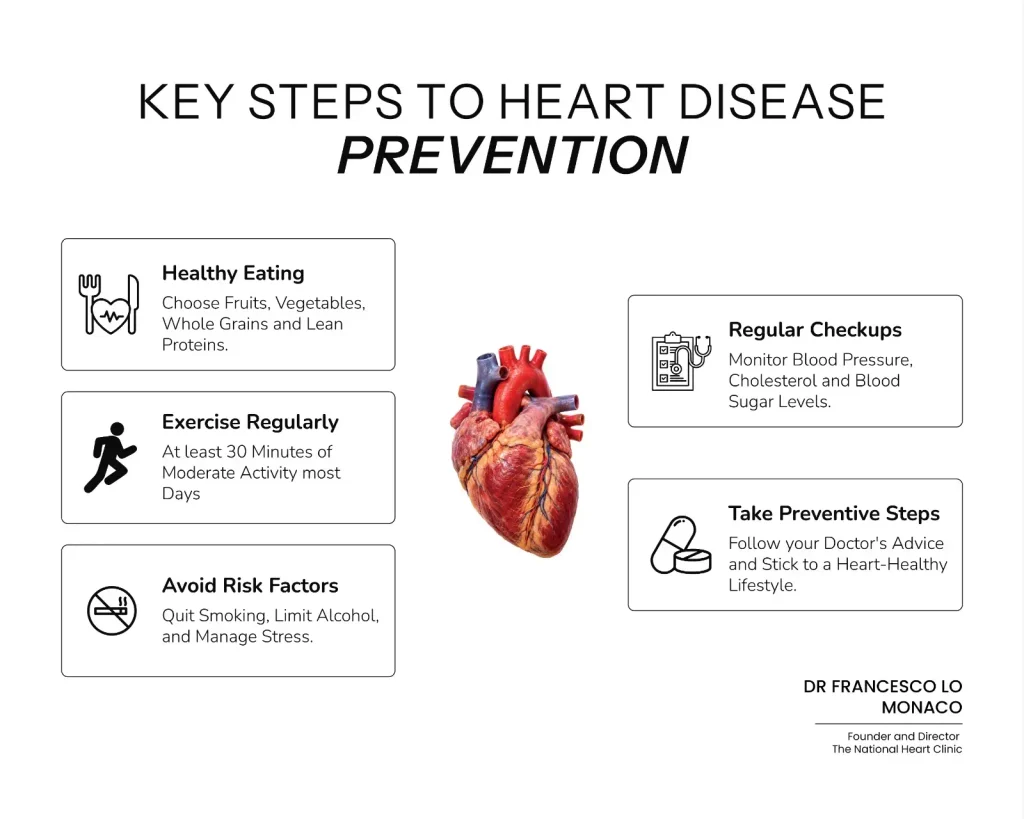
Key Steps to Heart Disease Prevention
Preventing heart disease involves understanding your individual risk and making practical changes that support long-term cardiovascular health. Here are the important lifestyle adjustments you can adopt to optimise your cardiac health:
Eating Healthy
A heart-healthy diet can help reduce your risk of cardiovascular disease by supporting healthy blood pressure, cholesterol and blood sugar levels. Eat a balanced diet, including vegetables, fruits, whole grains, nuts and seeds, along with healthy sources of protein such as fish and lean meats. Limiting foods high in saturated fat, salt and added sugar helps avoid cardiovascular risks.
Exercise Regularly
Regular physical activity helps your heart work more efficiently and improves your overall fitness. Doctors recommend regular moderate-intensity activity, such as brisk walking, cycling or swimming, for optimum cardiovascular endurance and wellbeing.
Avoid Risk Factors
Many cardiovascular risk factors can be reduced through lifestyle changes. Smoking, excessive alcohol consumption, obesity, physical inactivity and ongoing stress are a few of them. Stopping smoking, maintaining a healthy weight, staying active, limiting alcohol consumption, and adopting practical ways to manage stress can contribute to better heart health.
Regular Heart-Health Check-ups
Regular cardiovascular health checks are essential to identify risk factors early. Depending on your condition and symptoms, you may consider regular health assessments for blood pressure, cholesterol and blood glucose monitoring, as well as assessing your family history, lifestyle and other factors that may affect your heart health.
Take Preventive Steps
Prevention is not limited to a single test or appointment. It involves understanding your individual cardiovascular risk and taking appropriate steps to reduce it over time. It may include lifestyle changes, monitoring risk factors, managing existing conditions and following medical advice where treatment is recommended.
What to Expect in Your First Preventive Cardiology Appointment?
Your first visit will involve a complete risk assessment to assess your current heart health issues and future complications by:
- Analysing your cardiac symptoms and general health condition.
- Reviewing your medical and family history.
- Evaluating your lifestyle, including your diet, eating habits, physical activity, and rest & sleep quality.
- Assessing your risk of developing heart disease and other potential future complications.
- Where clinically appropriate, recommending further cardiac tests and diagnostics for detailed investigation.
- Providing heart-healthy lifestyle guidance and expert insights to protect your heart health and ensure long-term wellbeing.
Three Stages Of Preventive Heart Care
Heart care isn’t the same for everyone. It depends on where you are – before risks start, after risks appear, or after a diagnosis. Preventive heart care comprises 3 stages:
Primordial Prevention
Primordial prevention focuses on preventing cardiovascular risk factors from developing. It demands eating well, staying active, keeping a healthy weight, and avoiding smoking. Simple heart-healthy habits can make a big difference.
Primary Prevention
This stage is for people who have risk factors, like high blood pressure or high cholesterol, but haven’t been diagnosed with heart disease yet. The goal is to manage these risks early. This can include lifestyle changes, regular check-ups, and sometimes medicine.
Secondary Prevention
This stage is for people who already have heart disease. The goal now is to prevent it from getting worse. This includes ongoing treatment, healthy habits, regular monitoring, and follow-up visits to protect your heart.
When to See a Preventive Cardiologist?
A preventive cardiologist focuses on reducing heart disease risk before it becomes a serious cardiac concern. The approach is proactive rather than reactive, identifying potential cardiovascular risks early and addressing them before they contribute to heart disease or other cardiovascular complications.
Seeing a preventive cardiologist can be especially valuable if you have factors that may increase your cardiovascular risk, or if you want a detailed understanding of your long-term heart health. It may include:
- A strong family history of cardiovascular disease, heart attack, stroke, or PAD.
- Cardiovascular risk factors, such as high blood pressure, diabetes, obesity, unhealthy diet, or a sedentary lifestyle.
- Gender-associated risks, such as men being more at risk of developing heart disease than women
- Ethnic background, i.e., certain ethnic groups can have a higher risk of particular cardiovascular conditions or may develop at a younger age.
- Proactive heart health assessment to understand and protect your cardiovascular wellbeing.
If you’re concerned about your heart health and want a proactive approach to gain insights and reduce future complications, you can consult Dr Francesco Lo Monaco, Consultant Cardiologist with a particular focus on preventive and functional cardiology.
His approach centres on identifying cardiovascular risks early, understanding the underlying issues, and using targeted cardiac investigations to treat these concerns with a personalised, patient-focused approach.
You can see Dr Lo Monaco at his private cardiology clinic, The National Heart Clinic, London or book an online consultation – from anywhere across the UK.
Don’t Wait For Symptoms, Take The First Step to Preventive Heart Care
A heart problem can take years to develop silently without showing any obvious signs. The right approach is to detect the issue before it causes serious concerns. This is the foundation of preventive cardiology – not waiting for symptoms or feeling unwell to take the step for treatment. Rather, it focuses on identifying risks early and managing them through lifestyle changes and consulting with a preventive cardiologist for routine health checks.
Want a proactive approach to your cardiovascular health or need consultation for a heart issue, book your appointment with Dr Lo Monaco, Preventive cardiologist in London and get expert insights to protect your heart health. Online consultations are also available.
Disclaimer
The information provided in this blog is for general information and educational purposes only. The content is not intended to be a substitute for professional medical advice, diagnosis, or treatment. Always seek the advice of your GP or a qualified medical professional regarding any medical condition. If you are experiencing a medical emergency, please contact emergency services immediately.