
7 Signs of Heart Disease: Early Symptoms You Should Know
Heart disease often develops over time. Some people may experience symptoms long before serious cardiovascular problems arise, or don’t have signs for years. Symptoms can vary from person to person; some may notice swelling in the feet and ankles, others may experience chest pain, breathlessness, or persistent, unusual fatigue. Recognising the early warning signs of heart disease can help you get timely treatment and prevent possible cardiovascular complications.

Don’t Wait Weeks for Answers
Get fast, specialist-led heart checks with same-day or quick appointments
What is Heart Disease?
Heart disease, also called cardiovascular disease (CVD), is a group of conditions that affect the heart and blood vessels. It may affect the heart’s structure and function. Heart disease can be due to a congenital defect or develop later in life. Many forms of heart disease can be prevented or treated with healthy lifestyle choices. Common forms of heart disease include:
- Irregular heartbeats, called arrhythmias
- Coronary artery disease
- Heart valve disease
- Disease of the heart muscle
Know More About Cardiac Conditions
Common Heart Disease Symptoms
Some people experience no symptoms before the diagnosis of heart disease, while others may feel unusual signs years before the detection. Common symptoms include:
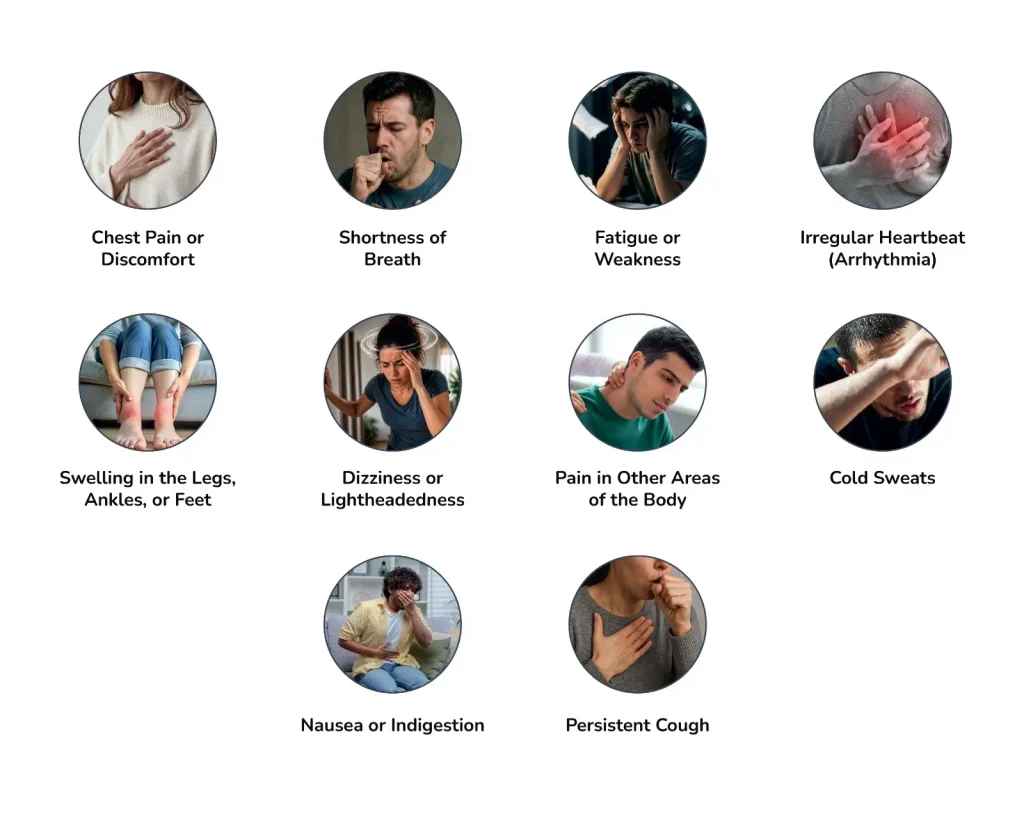
- Arm pain
- Feeling sick (nausea)
- Sweating without any obvious cause
- Palpitations
- Swelling or pain in your legs
- Pain in the jaw, neck, back, or throat
- A burning sensation in the stomach or chest
7 Early Warning Signs of Heart Disease You Should Know
Chest Pain
Many causes of chest pain are not linked to your heart; still, it is the most common sign of heart disease and often appears due to poor blood circulation. It feels like a discomfort or pain in your chest, between your neck and upper abdomen. The amount and intensity of the pain do not always give an exact idea if the pain is due to the heart or if other health issues are the triggers. Chest pain associated with cardiac issues may accompany the following symptoms:
- Mild or severe discomfort
- Sharp, burning sensation in the chest
- Pain under your breastbone, in the neck, arms, stomach, jaw, or upper back
- Shortness of breath
- Persistent, unusual fatigue and weakness
- Physical activity or stress worsens the symptoms
Shortness of Breath
Breathlessness associated with heart disease may become more noticeable during physical activity, even mild activity, and can sometimes occur at rest or while sleeping. It can happen when the heart can not pump blood efficiently, causing blood to back up in the blood vessels leading to the lungs and making it harder to breathe.
Fatigue
Fatigue can be caused by many reasons, including a demanding workload, anaemia, poor sleep, or other health conditions. However, persistent or unusual fatigue may sometimes be an early sign of a heart problem, particularly if:
- You experience unusual or persistent fatigue that does not improve with adequate rest.
- You feel unusually tired during routine or everyday activities.
- You feel extremely run down or weak despite getting enough sleep and rest.
Palpitations
Palpitations are the sensation of feeling your heartbeat. They may occur when the heart beats too quickly, irregularly, or with extra or missed beats. You may feel your heart racing, pounding, fluttering, or skipping a beat. Persistent or recurrent palpitations can sometimes be associated with an underlying heart rhythm problem.
Coughing or Wheezing
Persistent coughing or wheezing that is not caused by a chest infection, allergy, or another obvious condition may sometimes be a sign of fluid build-up in the lungs. This can occur due to the heart’s poor blood pumping efficiency, causing fluid build-up in the lungs.
Swelling in the Legs, Ankles, or Feet
Swelling (oedema) in the legs, ankles, or feet can be a sign of a heart problem. When the heart is not pumping blood properly to the veins of the legs, it causes fluid to accumulate in the tissues.
Poor Blood Supply to Extremities
Leg pain, aching, cramping, or unusual fatigue during walking or exercise can sometimes indicate reduced blood flow to the legs. It occurs when fatty deposits build up inside the arteries and restrict blood flow.
You may notice discomfort in your calves, thighs, or feet that appears during physical activity and improves after resting. Other symptoms can include cold feet, numbness, or changes in the colour of the skin.
Why Are Heart Disease Symptoms Often Missed?
Heart disease symptoms can be overlooked or mistaken for other health conditions, particularly when they are mild, intermittent, or develop gradually.
Women may experience symptoms such as breathlessness, unusual fatigue, nausea, dizziness, or discomfort rather than the more commonly recognised symptom of chest pain. It can sometimes make heart-related symptoms less obvious.
Some inherited heart conditions may also cause few or no noticeable symptoms for years. In some cases, the condition is only identified during a routine assessment or after complications develop.
Why Knowing Your Risk Factors Matters
Understanding your risk factors for heart disease helps you identify potential problems early and take steps to protect your heart health. Knowing your blood pressure, cholesterol levels, family history, and other risk factors can help you and your cardiologist assess your overall cardiovascular risk.
Identifying these risks early helps you make appropriate lifestyle changes and seek medical advice when needed. Taking action early can help reduce the risk of developing heart disease and its complications later in life.
When Should You Have a Heart Health Assessment?
A proactive heart health assessment can help identify cardiovascular risk factors and potential heart problems before they cause noticeable symptoms. It is especially valuable for individuals who have:
- A family history of heart disease
- Diabetes. High blood pressure, or high cholesterol
- Obesity
- Women undergoing perimenopause or menopause
- A history of smoking or vaping or currently smoke or vape
- Congenital heart defects
Conclusion
Heart disease does not always cause clear symptoms. Early warning signs of heart disease, such as breathlessness, persistent fatigue, palpitations, swelling, or reduced exercise tolerance may sometimes indicate an underlying heart problem.
A proactive heart health assessment can also help identify cardiovascular risks before complications develop. Do you have specific symptoms or are concerned about your heart health, book an appointment with Dr Francesco Lo Monaco, one of the top cardiologists in the UK, for a detailed cardiac assessment, personalised lifestyle guidance, and tailored treatment. Online consultations are available for patients across the UK.
Disclaimer
The information provided in this blog is for general information and educational purposes only. The content is not intended to be a substitute for professional medical advice, diagnosis, or treatment. Always seek the advice of your GP or a qualified medical professional regarding any medical condition. If you are experiencing a medical emergency, please contact emergency services immediately.