
When Can Dizziness and Blackouts Be Heart-Related?
Feeling dizzy or blacking out can be worrying, especially when you don’t know the underlying cause. Dehydration, low vitamin levels, tiredness, low blood pressure, and certain health conditions can all cause dizziness or make you feel faint. However, sometimes it can be linked to an underlying heart problem, particularly when it occurs alongside other cardiac symptoms.
That’s why experiencing these signs makes you wonder: Could it be related to my heart? Is it a serious concern? Can it be treated? Here, we explain the possible causes of dizziness and blackouts, when they could be related to your heart, and when it is important to seek medical advice.
What Do Dizziness and Blackouts Mean? Are They the Same?
Dizziness is a general term used to describe feelings such as light-headedness, unsteadiness, or a spinning sensation. You remain conscious when you feel dizzy, although it can sometimes make you feel as though you are about to faint or lose consciousness.
Fainting, or vasovagal syncope, on the other hand, is a temporary loss of consciousness caused by a brief reduction in blood flow to the brain. A person may suddenly lose consciousness, collapse, and remain unaware of their surroundings for a short period before recovering.
Although dizziness and blackouts are not the same, they can sometimes occur together. In some cases, they can be caused by an underlying heart condition, especially if they occur more frequently or are accompanied by symptoms, such as chest pain, palpitations, or shortness of breath.
Possible Cardiac Causes of Dizziness and Blackouts
Fainting or dizzy spells may be caused by a reduced blood supply to the brain, usually due to abnormal heart rhythm (too fast or too slow), narrowing of a heart valve, a drop in blood pressure while standing up (postural hypotension), or a side effect of certain medicines. Fainting is a potentially serious situation and is often rare or happens only under extreme circumstances.
Heart Conditions That Can Cause Dizziness and Fainting
Certain cardiac conditions can lead to dizzy spells and syncope. These may include:
- Atrial fibrillation
- Heart failure
- Irregular heart rhythm or heart rate
- POTS
When Can Dizziness and Blackouts Be Heart Related?
If dizzy spells or blackouts are associated with a heart problem, it may have one or more of these associated symptoms, such as:
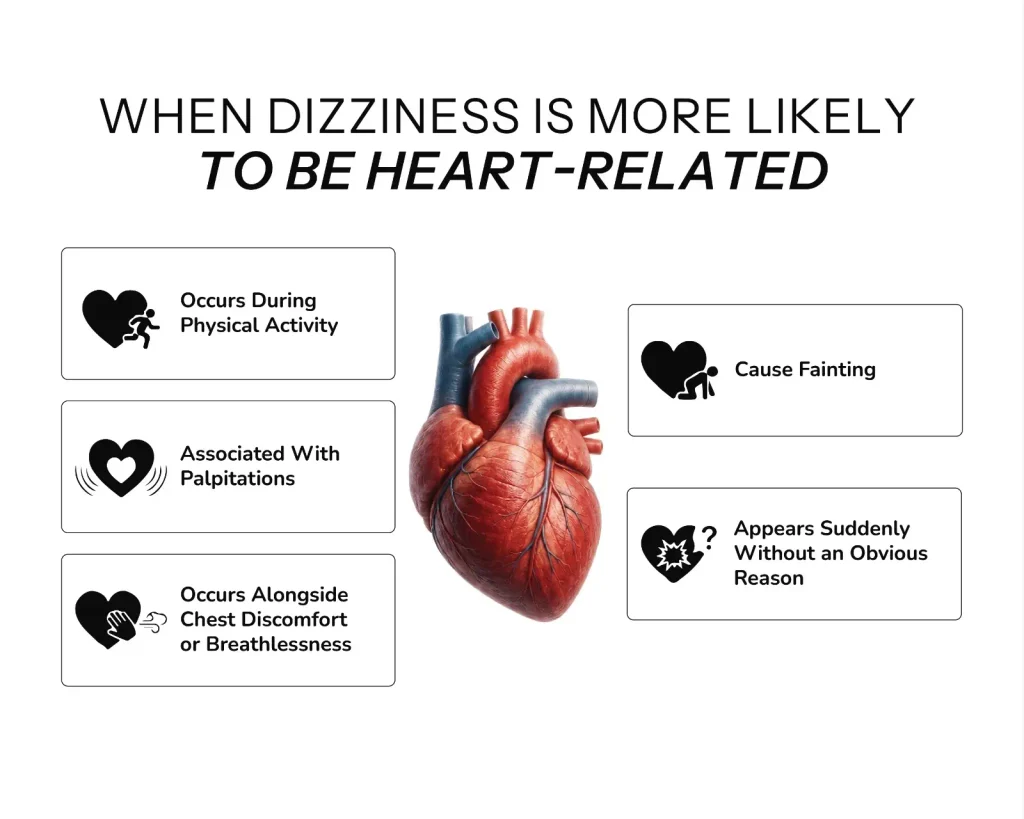
- Chest pain or discomfort
- Breathlessness
- Racing, pounding, or irregular heartbeat
- Extreme and persistent fatigue
- Occurs during physical activity
- Swollen feet and ankles
- Nausea
- Sudden sweating
If you experience one or more of these symptoms alongside dizziness, it is important to seek medical advice and consider a cardiac assessment. If your symptoms are severe, sudden, or include chest pain, severe breathlessness, or loss of consciousness, call 999 for emergency medical care rather than waiting for a routine appointment.
You can consult Dr Francesco Lo Monaco, one of the UK’s leading Consultant Cardiologists. Both in-person and online consultations are available.
Book a Cardiologist Appointment
When Dizziness is Less Likely to be Heart-Related?
Dizziness may not always be a cardiac concern; rather, it may be caused by some non-cardiac issues, such as:
- Infection in the inner ear
- Dehydration
- Low blood sugar
- Low blood pressure
- Sudden posture changes
- Iron deficiency
- Weakness
- Anxiety or stress
Understanding and improving the underlying cause helps you manage your symptoms in a better way. Therefore, it’s important to avoid self-diagnosis and seek a comprehensive cardiac assessment to identify the root cause and manage the signs accordingly.
Finding the Underlying Cause: How Can Dizziness/Blackouts Be Investigated?
Investigating dizziness and blackouts involves a detailed discussion of your symptoms, medical history, and any medicines you are taking. The doctor performs a physical examination and may recommend diagnostic tests to identify the underlying cause. These may include:
Electrocardiogram (ECG): Records the heart’s electrical activity and rhythm to identify abnormal heart rhythms and other electrical changes that may contribute to dizziness or blackouts.
Echocardiogram (Heart Ultrasound): Analyses the structure and function of the heart, including the heart chambers, valves, and blood flow. It can help identify structural heart conditions that may contribute to symptoms.
Ambulatory ECG Monitoring (Holter Monitor): If your symptoms are episodic and are not captured during a standard ECG, your doctor may recommend ambulatory ECG monitoring. A Holter monitor records the heart’s electrical activity continuously while you go about your daily activities.
Blood Pressure Monitoring: When you visit a clinic to investigate dizziness or blackouts, your doctor checks your blood pressure as part of the initial assessment. It can vary due to factors such as stress, anxiety, or the white coat effect. If your blood pressure needs to be assessed over a longer period, you may be advised to use an Ambulatory Blood Pressure Monitor (ABPM) that records your BP at intervals for 24 hours.
Exercise Tolerance Test: If your symptoms occur during physical activity, your doctor may recommend an Exercise Tolerance Test (ETT) that monitors your heart rate, rhythm, and blood pressure while you exercise. It can help assess how your heart responds to physical exertion and identify certain heart-related problems that may contribute to dizziness or blackouts.
When to See a Cardiologist?
Feeling dizzy or faint occasionally can happen for several reasons. However, if your symptoms become more frequent, worsen over time, or occur alongside chest pain, chest discomfort, breathlessness, or an irregular heartbeat, it is important to book a heart check up by a cardiologist to investigate the underlying cause.
If you experience severe or sudden symptoms, especially chest pain, significant breathlessness, or a blackout with ongoing symptoms, call 999 or go to A&E rather than waiting for a routine cardiologist appointment.
Conclusion
Dizziness and blackouts are not always heart-related symptoms. However, if you experience them more frequently, especially alongside chest pain, tightness, shortness of breath, or palpitations, it is important to have a complete cardiac assessment with a cardiologist. You can book an appointment with Dr Francesco Lo Monaco, Consultant Cardiologist, for an expert heart health checkup. Online consultations are also available throughout the UK.
Disclaimer
The information provided in this blog is for general information and educational purposes only. The content is not intended to be a substitute for professional medical advice, diagnosis, or treatment. Always seek the advice of your GP or a qualified medical professional regarding any medical condition. If you are experiencing a medical emergency, please contact emergency services immediately.