

Can High Cholesterol Make You Feel Tired? What You Should Know
Feeling unusually tired can have many possible causes, including poor sleep, lifestyle factors, ageing, medications, or an underlying health condition. Some people assume their fatigue can be due to high cholesterol levels, but raised cholesterol doesn’t usually cause fatigue directly.
In fact, it often has no noticeable symptoms and can remain undetected for years. However, persistently high levels of LDL cholesterol (bad cholesterol) can cause different cardiovascular health issues, which may cause symptoms including reduced exercise tolerance, breathlessness, chest discomfort, or unusual tiredness.
In this guide, we explain whether high cholesterol can make you feel tired, the associated symptoms and cardiovascular conditions, and when fatigue may require further investigation.
What is High Cholesterol?
Cholesterol is a fat-like, waxy substance in the blood, produced mainly by the liver. It plays several essential roles in the body, including building cell membranes, producing hormones and helping the liver make bile for digestion. Despite having multiple health benefits, too much cholesterol in the blood can raise your risk for heart and blood vessel problems. If left unmanaged, these issues can lead to different cardiovascular complications.
What are Different Types of Cholesterol?
Cholesterol is of different types, and each type has a different effect in the body. These are:
HDL Cholesterol
High-Density Lipoprotein (HDL) is commonly known as ‘Good Cholesterol.’ It carries cholesterol away from cells, back to the liver to be broken down and protects cardiovascular health.
LDL Cholesterol
Low-Density Lipoprotein (LDL) is commonly known as ‘Bad Cholesterol.’ It can clog up in arteries and cause cardiovascular complications such as heart disease, heart attack, or stroke.
VLDL Cholesterol
Very-Low-Density Lipoprotein (VLDL) supplies fats, called triglycerides, to the body tissues. High levels may accumulate plaque on artery walls, restricting blood flow and increasing the risk of cardiovascular issues.
Can High Cholesterol Make You Feel Tired? Is There Any Link?
High cholesterol itself does not usually cause fatigue directly. However, persistently raised cholesterol can contribute to atherosclerosis, where fatty deposits narrow the arteries and reduce blood flow to the heart and other parts of the body. This reduced circulation can contribute to tiredness, reduced energy and poor exercise tolerance. Moreover, conditions associated with high cholesterol, such as coronary heart disease, may also cause fatigue and other symptoms.
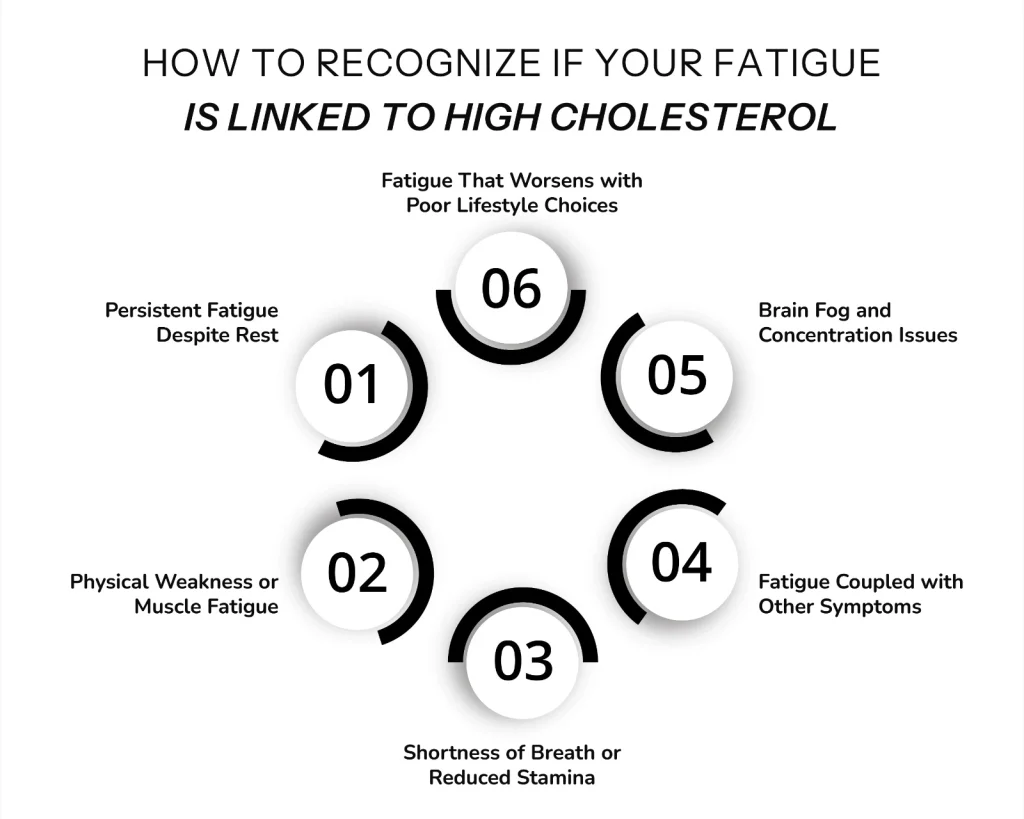
Why Fatigue Feels Worse With High Cholesterol?
High cholesterol causes plaque buildup in the arteries, causing them to narrow and reduce the supply of oxygen and nutrient-rich blood to different parts of the body. As a result, the heart needs to work harder to pump blood through narrowed arteries, which can increase strain on the body and cause constant fatigue.
Raised cholesterol may also cause inflammation that affects your immune system, disrupts cellular processes, and increases stress levels. Therefore, although fatigue is not a direct symptom of high cholesterol, there can be several interconnected ways in which high cholesterol may contribute to tiredness.
Tips to Improve Your Energy Level With High Cholesterol
- Eat a balanced, heart-healthy diet rich in vegetables, fruits, whole grains and fibre
- Increase your physical activity
- Stay well hydrated throughout the day
- Maintain a healthy and consistent sleep routine
- Limit foods high in saturated and trans fats
- Manage stress through relaxation techniques, exercise or other activities you enjoy
- Take prescribed cholesterol-lowering medication as directed by your healthcare professional
Other Possible Reasons for Tiredness
- Poor sleep or sleep disorders
- Stress or anxiety
- Sedentary lifestyle
- Anaemia or iron deficiency
- Diabetes
- Hormonal imbalance, especially Thyroid disorder
- Infections
- Chronic health conditions
When Should You See a Doctor?
Consult a healthcare professional if you experience persistent or unexplained tiredness, particularly when accompanied by chest pain or pressure, breathlessness, dizziness or fainting. People with a known health condition, a family history of heart disease, or ongoing fatigue should also seek medical advice rather than leaving the symptoms undiagnosed. A medical assessment can help identify the underlying cause of tiredness and determine whether further tests are needed.
Conclusion
High cholesterol does not usually cause tiredness directly, although there can be an indirect link between raised cholesterol levels and fatigue. As persistent tiredness can have many causes, it is important to investigate the underlying reason rather than assuming it is due to high cholesterol. If you are concerned about your cholesterol levels or ongoing fatigue, you can book an appointment with Dr Francesco Lo Monaco for a comprehensive cardiovascular assessment. Both face-to-face and online consultations are available.
Disclaimer
The information provided in this blog is for general information and educational purposes only. The content is not intended to be a substitute for professional medical advice, diagnosis, or treatment. Always seek the advice of your GP or a qualified medical professional regarding any medical condition. If you are experiencing a medical emergency, please contact emergency services immediately.